
When you’re driving and suddenly see the check engine light come on, it’s easy to feel worried—especially if your car also has poor acceleration. Many drivers experience this, but not everyone understands what it means or what to do next. This article explains why your check engine light might be on, why your car is slow to accelerate, and what steps you can take to solve the problem safely and efficiently.
Why The Check Engine Light Matters
The check engine light is your car’s way of saying something is wrong with the engine or related systems. It’s connected to your car’s computer, which monitors thousands of signals every second. When it finds a problem, the light turns on.
If you notice poor acceleration at the same time, this is a sign that the problem is affecting your engine’s ability to produce power. Ignoring these signs can lead to bigger, more expensive repairs. Acting quickly can save you money and help keep you safe on the road.
Common Reasons For Poor Acceleration With Check Engine Light
Many different issues can cause both the check engine light and slow acceleration. Here are the most common:
- Faulty Oxygen Sensor
- The oxygen sensor measures how much oxygen is in your exhaust. If it fails, your engine can’t adjust the fuel mixture correctly, leading to poor performance.
- Clogged Fuel Filter
- A dirty fuel filter stops enough fuel from reaching the engine, making acceleration slow and uneven.
- Failing Mass Air Flow Sensor
- This sensor tells the engine how much air is coming in. If it gives wrong information, the engine can run too rich or too lean, causing both the warning light and slow pickup.
- Ignition Coil Problems
- Ignition coils make the spark that ignites fuel. If one fails, your engine may misfire and lose power.
- Bad Spark Plugs
- Worn or damaged spark plugs can’t ignite the fuel properly, causing sluggish acceleration and engine warning lights.
- Vacuum Leaks
- Leaks in hoses or seals let extra air into the engine, confusing the computer and reducing engine power.
- Catalytic Converter Issues
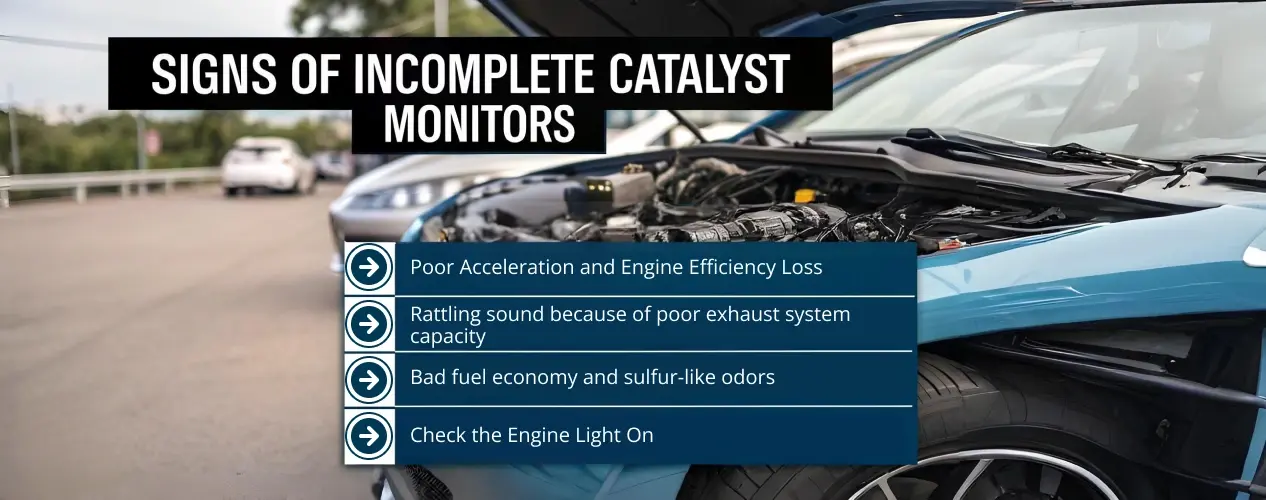
- A clogged or failing converter blocks exhaust flow, making the engine struggle to accelerate.
- Transmission Problems
- If the transmission slips or cannot shift properly, your car may feel slow and the check engine light may come on.
- Dirty or Failing Throttle Body
- The throttle body controls air entering the engine. Dirt can block airflow, causing slow response.
- Fuel Injector Problems
- Faulty injectors mean some cylinders don’t get fuel, so the engine can’t speed up as it should.
How Your Car’s Computer Finds Problems
Your car’s computer—often called the engine control unit (ECU)—uses sensors to monitor everything from air and fuel mixture to engine speed. When it finds something out of range, it stores a diagnostic trouble code (DTC) and turns on the check engine light.
To read these codes, you need a scan tool. Many auto parts stores can check codes for free, or you can buy a simple reader. Some codes are easy to fix, while others need a mechanic’s help.
Immediate Steps When You See The Light
If your check engine light comes on with poor acceleration, here’s what you should do:
- Check for Obvious Problems
- Listen for strange noises, check for smoke, and look for leaks under the car.
- Reduce Speed and Load
- Avoid heavy acceleration or carrying heavy loads. Drive gently to prevent further damage.
- Scan for Codes
- Use an OBD-II scanner to read the trouble codes. Write down the codes for later reference.
- Inspect Simple Parts
- Check the gas cap. A loose or damaged cap can trigger the light and reduce performance.
- Plan for Repair
- If the car is running roughly or making loud noises, stop driving and call for help. Otherwise, drive to a repair shop soon.
Credit: satjapan.com
Diagnostic Process: What Happens At The Shop
When you bring your car to a mechanic for check engine light poor acceleration, they follow a step-by-step process:
Step 1: Code Reading
The first step is plugging in a scan tool to retrieve the stored DTCs. Each code points to a general area, like “oxygen sensor circuit” or “misfire detected.”
Step 2: Visual And Physical Inspection
Mechanics check for obvious issues such as:
- Disconnected or cracked hoses
- Loose wires
- Dirty air filters
Step 3: Functional Testing
Technicians may test:
- Fuel pressure (to find clogged filters or weak pumps)
- Ignition spark (to check coils and plugs)
- Exhaust flow (to check the catalytic converter)
Step 4: Repair And Re-test
After fixing the problem, they clear the codes and test drive the car to make sure everything works well.
Key Systems That Affect Acceleration
To better understand what might be wrong, let’s look at the main systems that control acceleration:
Engine Air Intake
Your engine needs the right amount of air to burn fuel. The air filter, mass air flow sensor, and throttle body all help control airflow. Problems in this system can choke the engine.
Fuel Delivery
Fuel needs to reach the engine at the right pressure. The fuel pump, fuel filter, and injectors are responsible. Dirty or failing parts here often cause slow acceleration.
Ignition System
Spark plugs and ignition coils create the sparks that make the engine run. If they fail, the engine can’t produce enough power.
Exhaust System
If exhaust gases can’t escape, the engine can’t “breathe.” A clogged catalytic converter is a common cause of both a warning light and poor acceleration.
Transmission
If your transmission slips or can’t shift gears, the engine may run fine but the power doesn’t reach the wheels. This is often missed by beginners who focus only on the engine.
Data Table: Common Causes And Symptoms
Here is a quick comparison of common causes, their symptoms, and the tools needed to diagnose them:
| Cause | Symptoms | Diagnostic Tool |
|---|---|---|
| Oxygen Sensor | Poor power, rough idle, light on | Scan tool, multimeter |
| Fuel Filter | Slow acceleration, engine stalls | Fuel pressure gauge |
| Ignition Coil | Misfire, shaking, light flashing | OBD-II scanner, spark tester |
| Mass Air Flow Sensor | Hesitation, poor fuel economy | Scan tool, live data |
| Catalytic Converter | Loss of power, rotten egg smell | Backpressure gauge |
Common Mistakes Drivers Make
When faced with a check engine light and poor acceleration, many drivers make these mistakes:
- Ignoring the Problem
- Hoping it goes away can make things worse.
- Trying Random Repairs
- Changing parts without diagnosis wastes money.
- Using Cheap Parts
- Low-quality sensors or plugs can cause new problems.
- Not Addressing Maintenance
- Skipping oil changes or filter replacements makes issues more likely.
- Clearing the Code Without Fixing the Cause
- The light may stay off for a while, but the real problem remains.
Repair Costs: What To Expect
The cost to repair a check engine light with poor acceleration depends on the cause. Here’s a comparison to give you an idea:
| Problem | Average Cost (USD) | DIY Possible? |
|---|---|---|
| Spark Plugs | $50 – $150 | Yes |
| Oxygen Sensor | $150 – $300 | Yes, basic tools |
| Fuel Filter | $60 – $200 | Sometimes |
| Ignition Coil | $130 – $350 | Often |
| Catalytic Converter | $900 – $2500 | No |
Repairs like spark plugs or air filters can be done at home with basic skills, but catalytic converters and transmission work should be left to professionals.
Prevention Tips To Avoid Future Problems
It’s much easier and cheaper to prevent these problems than to fix them. Here’s how:
- Follow the Maintenance Schedule
- Change your oil, air filter, and spark plugs as recommended.
- Use Good Quality Fuel
- Cheap fuel can clog injectors and sensors.
- Don’t Ignore Small Changes
- If you feel hesitation or see a warning light, check it early.
- Keep Sensors Clean
- Air and mass air flow sensors can be cleaned with special sprays.
- Check for Recalls
- Some common problems are covered by free repairs from the manufacturer. You can check your car’s VIN on the NHTSA site or your dealer’s website.
Credit: www.youtube.com
Real-world Example
Imagine you’re driving your 2014 Toyota Corolla and notice the check engine light comes on as you try to merge onto the highway. The car feels slow, and you hear a slight rattling noise.
You stop at an auto parts store. The code reader shows “P0420”—catalytic converter efficiency below threshold. A quick search reveals this is a common problem for your car at higher mileage.
You take it to a trusted mechanic, who confirms the converter is clogged. The repair is expensive, but after replacement, your car accelerates smoothly again and the warning light stays off.
Table: Diy Vs Professional Repairs
Some repairs are safe to do yourself; others are best left to professionals. Here is a quick overview:
| Repair | DIY Friendly | Skills Needed |
|---|---|---|
| Air Filter Change | Yes | Very Basic |
| Spark Plug Replacement | Yes | Basic Hand Tools |
| Oxygen Sensor Replacement | Sometimes | Socket Set |
| Fuel Injector Cleaning | No | Special Tools |
| Catalytic Converter Replacement | No | Advanced |
Two Insights Beginners Often Miss
First, many drivers don’t realize that a transmission issue can trigger the check engine light and cause slow acceleration even if the engine sounds fine. Always consider both engine and transmission when diagnosing.
Second, a loose or faulty gas cap can sometimes cause both a check engine warning and slight power loss, especially on modern cars. Checking the gas cap is a simple, often overlooked fix.
When To Get Professional Help
If your car is shaking, making strange noises, or the check engine light is flashing, stop driving and call for help. A flashing light means a serious problem that can quickly damage the engine or the catalytic converter. If the light is steady and the car drives mostly fine, you can usually drive safely to a repair shop.
Credit: roda.com
Frequently Asked Questions
Why Does My Car Lose Power When The Check Engine Light Comes On?
The computer may limit engine power to protect the engine from damage. This is called “limp mode. ” Common causes include sensor failures, misfires, or clogged parts.
Can I Drive With The Check Engine Light On And Poor Acceleration?
It’s possible, but not recommended. If the light is flashing or the car drives very poorly, stop and get help. If the light is steady and the car runs okay, drive gently to a repair shop soon.
What Does A Diagnostic Code Like P0300 Mean?
P0300 means random misfire detected. This usually points to ignition or fuel system problems, which can cause both poor acceleration and the warning light.
Will Disconnecting The Battery Turn Off The Check Engine Light?
It may turn off the light for a short time, but it does not fix the problem. The light will come back if the issue isn’t repaired.
Where Can I Find More Information About Specific Trouble Codes?
You can check the meaning of codes on trusted websites like Wikipedia’s OBD page or ask your mechanic for details.
If your check engine light and poor acceleration happen together, don’t ignore them. Early diagnosis and repair can save you from bigger, costlier problems down the road. Regular maintenance and quick attention to warning signs keep your car running smoothly and safely.