
Buying an electric vehicle (EV) can be a smart move for both your wallet and the environment. But the real savings often come from understanding the EV federal tax credit—a government benefit that can reduce the cost of a new or used electric car by thousands of dollars. Many people get confused about how this credit works, who can claim it, and which vehicles qualify. If you’re considering an electric car, knowing the rules can help you make the best decision and avoid expensive mistakes.
This guide will explain everything you need to know about EV federal tax credit eligibility in simple, clear language. You’ll learn the main requirements, how much you can get, and the steps to claim your credit. We’ll also highlight common mistakes, give examples, and answer the most frequently asked questions. Whether you’re new to EVs or just want to make sure you get every dollar you deserve, this article will help you understand your options and maximize your savings.
What Is The Ev Federal Tax Credit?
The EV federal tax credit is a financial incentive from the U.S. government. It is designed to make electric vehicles more affordable and encourage people to switch from gasoline-powered cars. When you buy a qualifying electric car, you can claim a tax credit—meaning you pay less federal income tax for that year.
The credit amount depends on the type of car, its battery size, and sometimes where it was made. The maximum for new EVs is up to $7,500. For used EVs, the credit can be up to $4,000. This credit is not a rebate or cash back at the dealer—it reduces your tax bill when you file your taxes.
Who Is Eligible For The Credit?
Not everyone who buys an EV will get the full tax credit. There are several key requirements that apply to buyers, vehicles, and even your income level. Let’s break down each part.
Buyer Requirements
You must:
- Buy the vehicle for your own use (not for resale)
- Use the vehicle primarily in the U.S.
- Have enough federal tax liability to use the credit (the credit cannot be higher than your total federal tax bill)
- Not be claimed as a dependent on another person’s tax return
Income Limits
For new EVs:
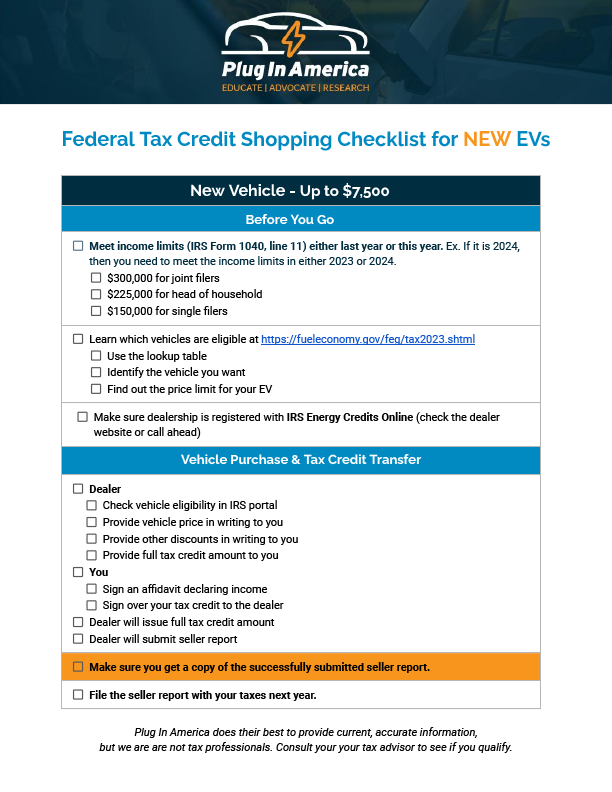
- Single filers: $150,000 or less
- Head of household: $225,000 or less
- Married filing jointly: $300,000 or less
For used EVs:
- Single filers: $75,000 or less
- Head of household: $112,500 or less
- Married filing jointly: $150,000 or less
If your modified adjusted gross income (MAGI) is above these limits, you cannot claim the credit.
Vehicle Eligibility
The car itself must also meet important rules:
- New or used: The vehicle can be new or used but must be purchased from a dealer.
- Battery size: For new cars, the battery must be at least 7 kWh; for used, at least 7 kWh.
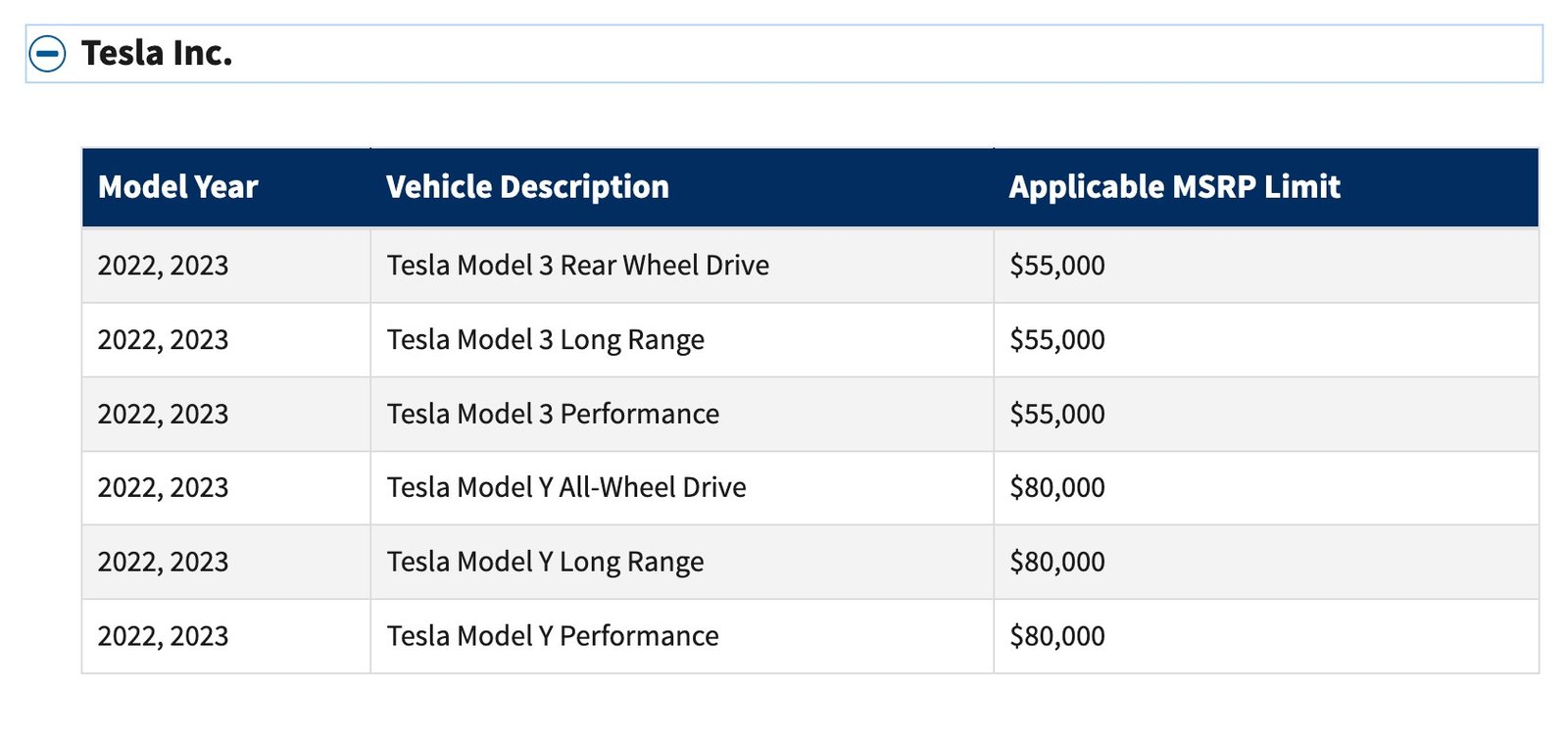
- MSRP limits: New cars must not exceed a certain price:
- Sedans: $55,000
- SUVs, trucks, vans: $80,000
- Final assembly in North America: For most new EVs, the final assembly must be in the U.S., Canada, or Mexico.
- Not previously registered: Used EVs must be at least two years old and not have been previously claimed for the credit.
How Much Is The Credit Worth?
The maximum tax credit for a new EV is $7,500. For used EVs, it’s up to $4,000 or 30% of the vehicle price, whichever is less. But not all cars qualify for the full amount. The exact value depends on:
- The car’s battery size
- Where the car (and its battery) was made
- The type of buyer and their income
Here’s a quick comparison of potential credits:
| Vehicle Type | Battery Size | Max Credit | MSRP Limit |
|---|---|---|---|
| New EV | 7 kWh or more | $7,500 | $55,000 (Sedans); $80,000 (SUVs/Trucks) |
| Used EV | 7 kWh or more | $4,000 or 30% of price | $25,000 |
| Plug-in Hybrid | 7 kWh or more | $7,500 | Same as above |
Battery And Assembly Rules
Since 2023, the U.S. government added stricter rules:
- The car’s battery components must be made or assembled in North America.
- Some critical minerals in the battery must come from the U.S. or a country with a free trade agreement.
These rules can reduce or even eliminate the credit for some models. Always check the current list of qualifying vehicles before you buy.
Which Vehicles Qualify In 2024?
Not every electric car is eligible. Each year, the list of qualifying vehicles changes as automakers update their models and supply chains. In 2024, popular models that can qualify (if you meet all requirements) include:
- Tesla Model Y
- Chevrolet Bolt
- Ford F-150 Lightning
- Rivian R1T
- Volkswagen ID.4
- Cadillac Lyriq
However, some popular cars like the Hyundai Ioniq 5 and Kia EV6 may not qualify for the full credit due to assembly or battery sourcing rules.
Here’s a sample of how some current models compare:
| Model | Qualifies for $7,500? | Final Assembly Location | Battery Requirement Met? |
|---|---|---|---|
| Tesla Model Y | Yes | U.S. | Yes |
| Chevrolet Bolt | Yes | U.S. | Yes |
| Hyundai Ioniq 5 | No | South Korea | Yes |
| Volkswagen ID.4 | Partial | U.S. | Partial |
Because these rules change often, always verify eligibility at the official IRS or Department of Energy websites before you buy.
Credit: insideevs.com
How To Claim The Ev Federal Tax Credit
Claiming the credit is not automatic. You need to follow these steps:
- Buy a qualifying vehicle from a licensed dealer.
- Get a sales receipt that lists the car’s VIN (Vehicle Identification Number).
- Ask the dealer for a written statement confirming the car meets federal requirements.
- Complete IRS Form 8936 (Qualified Plug-in Electric Drive Motor Vehicle Credit) when you file your federal taxes.
- Attach the form to your tax return for the year you bought the vehicle.
The credit will reduce your tax bill for that year. If your tax liability is less than the credit, you only get credit up to the amount you owe. There is no refund or carryover to future years.
Instant Dealer Credit (2024 Onward)
Starting in 2024, some dealerships can apply the credit at the point of sale—meaning you get the savings right away as a discount. But you must still meet all eligibility requirements. If you later find out you weren’t eligible, you may need to pay the amount back when you file your taxes.
Mistakes To Avoid
Many buyers miss out on the full benefit due to common mistakes. Here are some to watch for:
- Assuming all EVs qualify: Each model and year must be checked for eligibility.
- Not checking income limits: If your income is too high, you get nothing.
- Buying for resale: The credit only applies if you’re the end user.
- Forgetting about tax liability: If you don’t owe enough in taxes, you won’t get the full value.
- Missing paperwork: Not having the right documents can delay or deny your credit.
Non-obvious Insights Most Miss
- You cannot carry forward any unused credit. If your tax bill is less than the credit, you lose the extra amount. For example, if you owe $3,000 in taxes and qualify for $7,500, you only get $3,000.
- Leased vehicles: If you lease an EV, the credit goes to the leasing company—not you. Sometimes, they pass the savings to you in the lease deal, but that’s not guaranteed. Always ask how the credit is handled before signing a lease.
- Used EV credit is only once per vehicle: The used EV federal credit can only be claimed once per vehicle, not by every future buyer. If you’re buying used, check that the credit hasn’t been claimed already.
- State and local incentives can stack: Some states and cities offer additional rebates or credits on top of the federal benefit. These can add up to big savings but have their own rules.
State And Local Ev Incentives
Besides the federal credit, many states offer extra incentives. These can include rebates, tax credits, or reduced registration fees. For example, California’s Clean Vehicle Rebate can add up to $2,000 more in savings. But each program is different, with its own rules and limits.
Some states also offer HOV lane access or lower electricity rates for EV charging. Always check your state’s Department of Energy or local utility for more information.
Real-life Example
Let’s look at an example to see how the numbers work.
Maria buys a new Chevrolet Bolt for $32,000 in 2024.
- Her income is $120,000 (single filer), so she meets the income requirement.
- The Bolt qualifies for the full $7,500 credit.
- Maria owes $8,000 in federal taxes for the year.
- She files IRS Form 8936 with her tax return.
Result: Maria’s tax bill is reduced by $7,500, so she only pays $500 in federal taxes.
If Maria’s tax bill had been only $5,000, she would only get $5,000 in credit and lose the remaining $2,500.
Other Vehicles That May Qualify
The federal tax credit is not just for fully electric cars. Plug-in hybrid vehicles (PHEVs) and even some hydrogen fuel cell vehicles can qualify, as long as they meet the battery and assembly requirements. Examples include:
- Toyota Prius Prime
- Ford Escape Plug-In Hybrid
- Hyundai Tucson Plug-In Hybrid
If you’re not sure if a specific vehicle qualifies, ask the dealer or check the official eligibility list.
Credit: pluginamerica.org
When To Buy For Maximum Savings
Timing matters. Because the IRS updates the eligibility list and automakers change their supply chains, a car that qualifies this year may not qualify next year—or even next month. If you see a deal and the car qualifies, it’s smart to act quickly.
Waiting can mean missing out, as rules and supply can change fast.
Where To Find More Information
The IRS and Department of Energy offer official lists of eligible vehicles and more details about the credit. For up-to-date information, visit the Department of Energy’s EV Tax Credit page.

Credit: www.caranddriver.com
Frequently Asked Questions
Can I Get The Ev Federal Tax Credit If I Lease My Car?
No, the credit goes to the leasing company. Sometimes, they pass part of the savings to you in the form of lower lease payments, but this is not required. Always ask the dealer if and how the credit is applied to your lease.
What If My Tax Bill Is Less Than The Credit Amount?
You only get credit up to the amount of your federal tax liability. For example, if your tax bill is $2,000 and you qualify for $7,500, you only get $2,000. There is no refund or carryover to future years.
Can I Combine The Federal Credit With State Or Local Ev Incentives?
Yes, you can combine the federal credit with state, local, and utility incentives, as long as you meet each program’s requirements. This can make EVs much more affordable.
Does The Credit Apply To Used Electric Vehicles?
Yes, there is a separate federal tax credit for used EVs, up to $4,000 or 30% of the sale price (whichever is less). The car must be at least two years old, sold by a dealer, and meet other requirements.
How Do I Know If A Specific Car Qualifies?
Check the official IRS or Department of Energy lists before you buy. Ask your dealer for written confirmation that the car qualifies, and keep all paperwork for your records.
Switching to an electric car can offer big financial rewards, but only if you understand the details of EV federal tax credit eligibility. With the right information, you can save thousands and drive into a cleaner, greener future.