
The Nissan Leaf is one of the most popular electric vehicles (EVs) in the world. Thousands of drivers choose the Leaf for its affordable price, reliable performance, and quiet ride. However, one topic that often concerns both current and potential owners is battery degradation. Understanding how the Leaf’s battery ages over time is key to making an informed decision. This article explains what battery degradation means, why it happens, how fast it occurs in the Nissan Leaf, and what you can do to reduce its impact. You’ll also find useful data, examples, and practical advice that go beyond the basics.
What Is Nissan Leaf Battery Degradation?
Battery degradation is the slow loss of a battery’s ability to store and deliver energy. For the Nissan Leaf, this means a decrease in driving range and sometimes slower charging over the years. Unlike traditional car batteries, lithium-ion batteries (like those in the Leaf) do not fail suddenly. Instead, their capacity fades gradually. A new Nissan Leaf might travel 150 miles on a full charge, but after many years, that number will be lower.
Why Does Battery Degradation Happen?
Degradation happens because of chemical changes inside the battery during regular use. Every time you charge and discharge the battery, a small amount of wear occurs. Temperature, charging habits, and even how you drive affect this process. Unlike fuel tanks that stay the same, EV batteries are always changing from the moment you start using them.
How Fast Does The Nissan Leaf Battery Degrade?
Actual battery degradation rates depend on several factors. Nissan Leaf owners and studies report these typical numbers:
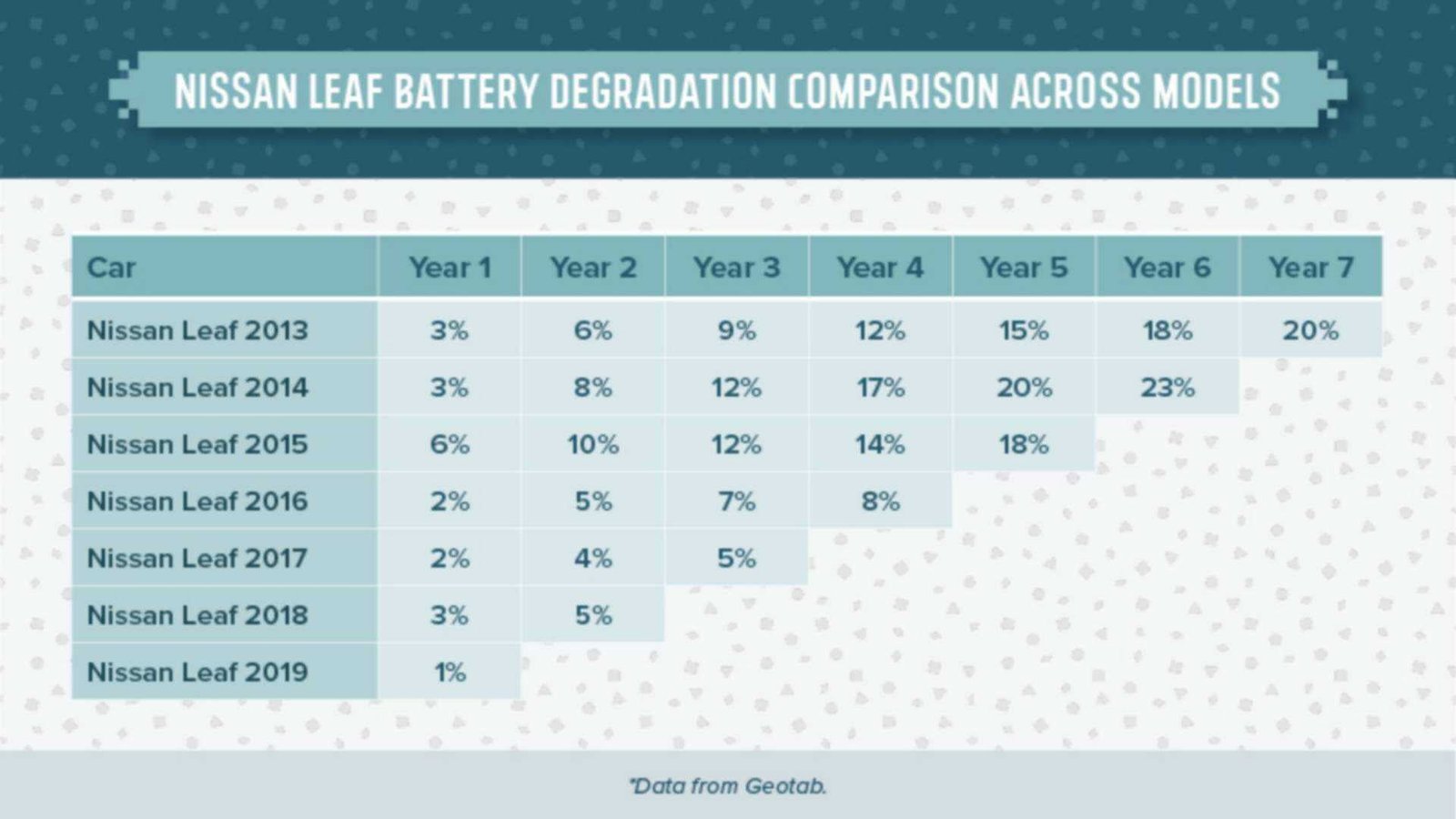
- In the first year, most Leafs lose about 2-5% capacity.
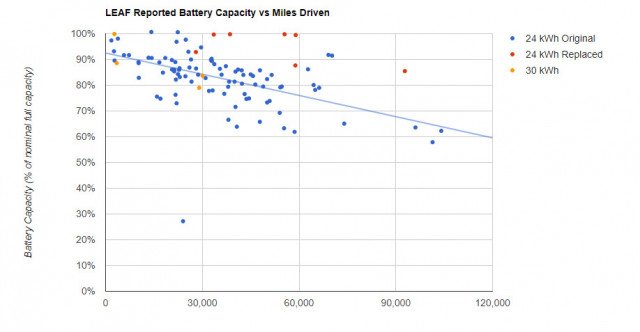
- After 5 years, the average battery may lose 10-20%.
- By year 8 or 100,000 miles, loss of 20-25% is common.
But these are averages. Some Leafs degrade faster, especially in hot climates or with frequent fast charging.
Example Of Real-world Degradation
Consider a 2015 Nissan Leaf with a 24 kWh battery. When new, it could drive about 84 miles. After 7 years, with around 20% degradation, the range drops to around 67 miles.
Key Factors Influencing Nissan Leaf Battery Degradation
Several elements affect how quickly the Leaf’s battery loses capacity. Understanding these helps you make choices that slow the process.
1. Temperature
High heat is the number one enemy of lithium-ion batteries. If you live in a hot climate (like Arizona or Dubai), your Leaf will likely degrade faster. This is because heat speeds up the chemical reactions that break down the battery’s internal structure.
On the other hand, very cold weather can temporarily reduce range but doesn’t cause permanent loss as quickly.
2. Charging Habits
How you charge matters. Frequent use of DC fast charging (like CHAdeMO stations) can increase degradation compared to regular Level 1 or Level 2 charging at home. Keeping the battery always at 100% or running it down to 0% often also stresses the battery.
3. Depth Of Discharge
The deeper you discharge the battery (using most of its energy before recharging), the more wear it experiences. Keeping the battery between 20% and 80% charge is gentler and reduces long-term loss.
4. Battery Chemistry And Cooling
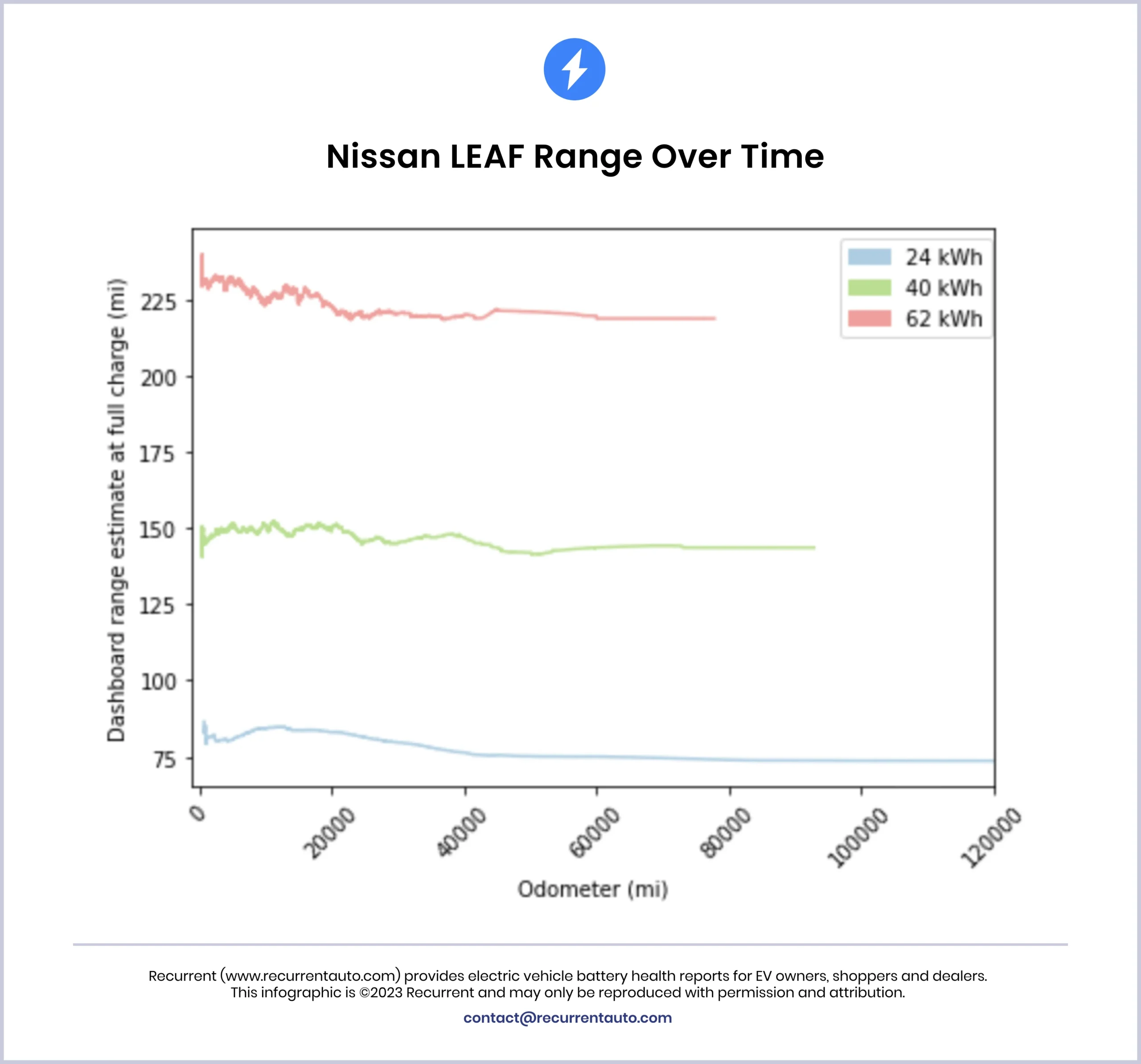
Early Nissan Leafs (2011-2017) do not have active thermal management (no liquid cooling), which makes them more sensitive to heat. Later models (especially from 2018 onward with the 40 kWh and 62 kWh packs) have improved chemistry, but most still lack liquid cooling.
This means high temperatures during charging or driving can speed up degradation.
5. Mileage And Usage Patterns
High annual mileage means more charge and discharge cycles, leading to faster wear. But even low-mileage Leafs can degrade if stored for long periods at full or empty charge.
How The Nissan Leaf Compares To Other Evs
Nissan Leaf battery packs are known for two things: reliability and lack of active cooling. How does this affect real-world performance compared to rivals?
| Model | Battery Cooling | Average Capacity Loss (5 years) |
|---|---|---|
| Nissan Leaf (24/30/40 kWh) | Air-cooled | ~15-20% |
| Tesla Model 3 | Liquid-cooled | ~8-10% |
| Chevrolet Bolt EV | Liquid-cooled | ~10-15% |
| Hyundai Kona Electric | Liquid-cooled | ~7-12% |
As you can see, the lack of liquid cooling in the Leaf makes it more sensitive to heat, especially in older models.
How To Check Battery Health In A Nissan Leaf
Knowing the current health of your battery is important for both owners and buyers of used Leafs.
Battery Capacity Bars
On the dashboard, the Leaf shows capacity bars (not just charge level). A new Leaf shows 12 bars. Each bar lost is about 6-7% capacity gone. Losing the first bar is common after 3-5 years, depending on climate and use.
Third-party Tools
Apps like LeafSpy connect to the car’s computer and show “State of Health” (SOH) as a percentage. This gives a more precise number than the bars. For example, 85% SOH means the battery can store 85% as much energy as when new.
Professional Inspection
Dealerships can perform a battery test and print a report. This is especially useful before buying a used Nissan Leaf.
Credit: www.greencarreports.com
Nissan Leaf Battery Warranty Coverage
Nissan offers an 8-year/100,000-mile warranty (in most regions) for the battery. However, the warranty covers major loss (usually if the capacity drops below 9 bars out of 12). Small losses are not covered. If you lose capacity faster than expected, the warranty may provide a replacement pack.
Real-world Data: Owner Experiences
Many Nissan Leaf owners share battery data online. Here’s a summary of what you can expect:
| Year/Model | Battery Size | Average Capacity at 5 Years | Notes |
|---|---|---|---|
| 2013 Leaf | 24 kWh | 80-85% | Faster loss in hot regions |
| 2016 Leaf | 30 kWh | 78-83% | Some reports of rapid loss |
| 2018 Leaf | 40 kWh | 85-90% | Better chemistry, still air-cooled |
| 2020 Leaf Plus | 62 kWh | 92-95% | Too new for long-term data |
This shows that newer Leafs hold capacity better, but heat and charging habits still matter.
Tips To Slow Down Battery Degradation
There are several smart habits that can help you get the most life from your Nissan Leaf battery.
- Avoid frequent fast charging. Use Level 2 (home or public) when possible.
- Park in the shade or garage. This limits heat exposure.
- Don’t leave the car fully charged or empty for long. Aim for 20-80% most of the time.
- Drive smoothly. Hard acceleration and deep discharging stress the battery.
- Precondition the car while plugged in. This means heating or cooling the cabin before you unplug to avoid using battery power for climate control.
- Check battery health yearly. Use LeafSpy or a dealer to monitor changes.
- Update car software. Nissan sometimes releases updates that can help battery management.
A non-obvious tip: even if you only drive short distances, don’t keep the battery at full charge all week. Small top-ups are better than large, infrequent charges.
What Happens When The Battery Degrades?
Aging batteries mean less range and sometimes slower acceleration. The car remains safe, but you may need to plan more charging stops. The Leaf will not suddenly stop working—range simply gets shorter. If the battery becomes too weak, you can replace it (though this can be costly).
Some owners use older Leafs as city cars, where even a reduced range is enough.
Credit: www.recurrentauto.com
Nissan Leaf Battery Replacement: Cost And Options
When capacity loss becomes a problem, replacement is an option. Nissan offers new battery packs, but prices vary:
- 24 kWh pack: $5,000–$6,500 (including installation)
- 40 kWh pack: $7,000–$8,500 (depending on region)
Some independent shops offer refurbished packs or upgrades. Sometimes, you can install a larger battery (like swapping a 24 kWh for a 40 kWh), but this requires special work.
Not all Nissan dealers are experienced in battery swaps. Choose a shop with EV experience. Also, check if your old battery can be recycled or reused in energy storage projects.
Buying A Used Nissan Leaf: What To Check
If you’re shopping for a used Leaf, battery health is the most important factor. Do not just look at mileage—ask for the battery’s state of health. Check the capacity bars, use an app like LeafSpy, and ask about the car’s charging history.
Cars used in hot climates with lots of fast charging may lose range faster.
A common mistake: buyers only compare model year and mileage, not battery SOH. Always check battery condition before buying.
The Future Of Nissan Leaf Batteries
Nissan continues to improve battery chemistry and management. The latest Leaf models hold up better than older ones. Also, battery recycling and reuse are growing, which means old packs are less likely to end up as waste. Some owners even give their old batteries a “second life” as home energy storage.
Ongoing research shows that, with proper care, Nissan Leaf batteries can last over 10 years for most drivers. In the coming years, expect even more durable packs and better management systems.
Frequently Asked Questions
How Many Miles Can A Nissan Leaf Battery Last Before It Needs Replacing?
Most Nissan Leaf batteries last 100,000 to 150,000 miles before major capacity loss. Some owners reach 200,000 miles, especially in mild climates and with gentle charging habits.
Does The Nissan Leaf Have Battery Cooling?
Most Nissan Leafs use air cooling instead of liquid cooling. This means batteries can get hotter, especially during fast charging or in hot weather, which can speed up degradation.
Can I Upgrade My Nissan Leaf Battery To A Larger Pack?
Yes, some shops offer battery upgrades (for example, installing a 40 kWh pack in an older Leaf). However, this is complex and not all Nissan dealers do it. Costs can be high, and you should check local regulations.
What Is The Cost To Replace A Nissan Leaf Battery?
Replacing a Nissan Leaf battery typically costs $5,000–$8,500, depending on pack size and labor. Prices vary by country and shop. Refurbished or used packs can be cheaper, but may not last as long.
Where Can I Find Real-world Nissan Leaf Battery Data?
For real-world data, owner forums and research reports are useful. One trusted source is the Wikipedia Nissan Leaf page, which has links to studies and owner experiences.
The Nissan Leaf remains a practical, affordable EV, but understanding battery degradation is essential for happy ownership. With the right knowledge and habits, you can enjoy your Leaf for many years and miles.
Credit: www.reddit.com