
If you own a car, you may have heard of the trouble code P0442 Small Evap Leak. This code often appears when your vehicle’s check engine light turns on, and it can worry many drivers. But what does P0442 really mean? Is it dangerous? Does it need urgent repair, or can you continue driving? This article explains everything about the P0442 code, including what triggers it, how to find the problem, repair options, and even tips to avoid making costly mistakes. By the end, you’ll feel confident about dealing with a small EVAP leak, even if you’re not a car expert.
What Does P0442 Small Evap Leak Mean?
The P0442 code relates to your car’s Evaporative Emission Control System (EVAP). This system prevents gasoline vapors from escaping into the air. Instead, it stores them in a charcoal canister and sends them to the engine to be burned.
When your car’s computer (ECU) detects a small leak in this system—about the size of a pinhole (0. 02 to 0. 04 inches)—it sets the P0442 code. “Small” means the leak is smaller than for other EVAP codes, but it’s still big enough to affect emissions and engine performance over time.
Common Causes Of P0442 Code
Understanding what triggers the P0442 code helps you solve the problem faster. Here are the most frequent causes:
- Loose or damaged gas cap – The simplest and most common reason. If the gas cap isn’t tight or has a worn seal, it can let vapor leak.
- Cracked or disconnected EVAP hoses – Hoses connect the system’s parts. Small cracks or loose connections cause leaks.
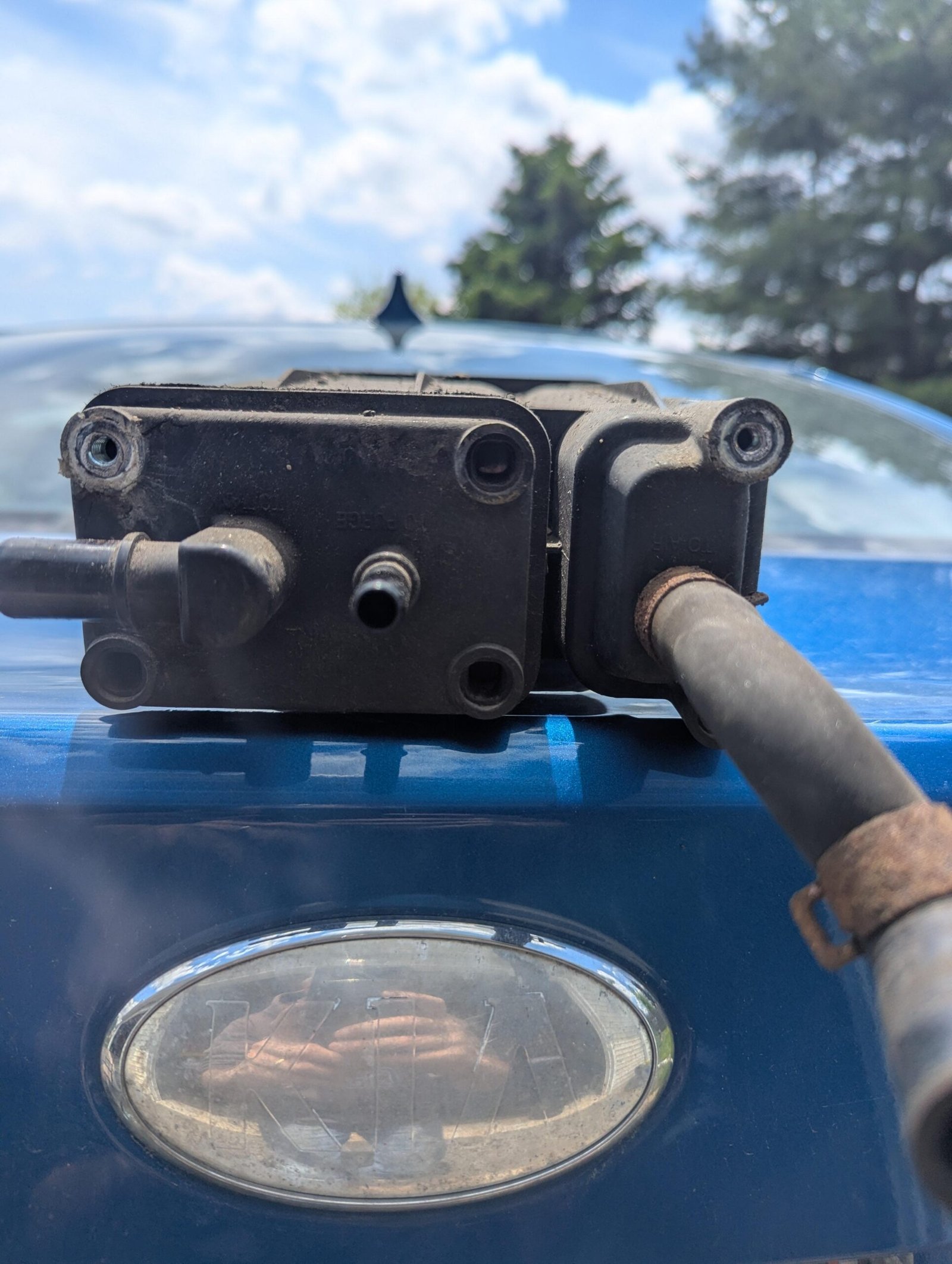
- Leaky charcoal canister – This part stores the gasoline vapors. Damage or cracks allow vapors to escape.
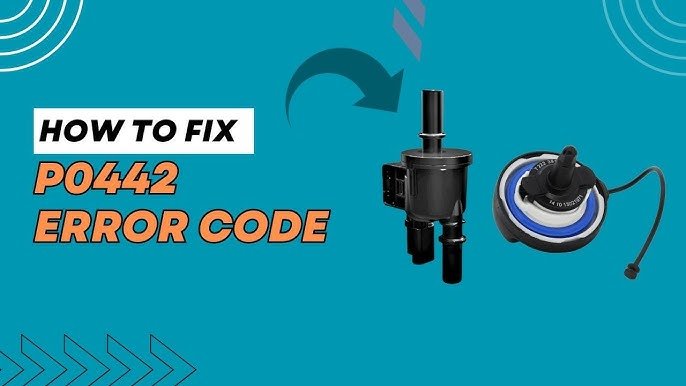
- Faulty purge valve – The purge valve controls vapor flow. If stuck open or closed, it can cause leaks.
- Faulty vent valve/solenoid – If this valve doesn’t close correctly, vapors escape.
- Rust or corrosion on fuel tank neck – Especially in older cars, rust can let vapor leak near the gas cap.
- Failed EVAP pressure sensor – Sometimes, a sensor gives a false leak signal.
- Damaged fuel filler neck – Cracks or dents in the neck can cause leaks.
Not all causes are easy to spot. Sometimes, a leak is so small you can’t see it with your eyes.
Credit: www.youtube.com
Symptoms Of P0442 Small Evap Leak
Unlike some engine problems, a small EVAP leak usually does not cause major performance issues. But you may notice:
- Check engine light – Usually the only sign.
- Slight fuel smell – If the leak is near the gas cap or a hose.
- Failed emissions test – The car may not pass a smog or emissions test until the problem is fixed.
- Slightly lower fuel economy – Rare, but possible if vapors escape instead of being burned.
One important insight: P0442 usually does not cause engine misfires, hard starting, or stalling. If you notice these, you likely have another problem too.
How To Diagnose P0442 Code
Finding the source of a small leak can be tricky, even for experienced mechanics. Here is a step-by-step process:
1. Check The Gas Cap
- Remove and inspect the cap. Look for cracks or worn rubber seals.
- Make sure it tightens fully and clicks.
- Clear the code, drive for a few days, and see if the code returns.
2. Inspect Hoses And Connections
- Look for loose, disconnected, or cracked EVAP hoses.
- Check under the car near the gas tank and engine bay.
- Replace any damaged hoses.
3. Listen And Smell
- Sniff around the gas cap and rear wheels for fuel vapor smells.
- Sometimes, you can hear a faint hiss near a leak.
4. Use A Smoke Machine (advanced)
- Mechanics often use a smoke machine to find tiny leaks.
- The machine pumps smoke into the EVAP system, and smoke escapes at the leak point.
5. Check Valves And Sensors
- Use an OBD-II scanner to test the purge and vent valves.
- Replace any valves that don’t open or close properly.
6. Inspect The Charcoal Canister
- Remove the canister and check for cracks.
- Shake it gently—if you hear loose charcoal, it may be damaged.
7. Test The Fuel Filler Neck
- Look for dents, rust, or cracks, especially in older vehicles.
A useful tip: Not all leaks trigger the code right away. Sometimes, the car runs test cycles only when the tank is between 15% and 85% full. If you just filled up or the tank is near empty, wait a few days before rechecking.
Credit: www.reddit.com
How To Fix P0442 Small Evap Leak
The best fix depends on the cause. Here are some repair options:
- Tighten or replace the gas cap – Costs very little and solves most cases.
- Replace cracked hoses – Cheap and simple with basic tools.
- Replace the charcoal canister – More expensive, but sometimes needed.
- Replace purge or vent valves – Moderate cost, often DIY-friendly.
- Repair or replace fuel filler neck – Can be more complex; sometimes needs a mechanic.
- Replace EVAP pressure sensor – Only if the sensor is faulty.
- Professional smoke test and repair – If you can’t find the leak, a mechanic can help.
Below is a comparison of average repair costs for common P0442 fixes:
| Repair Action | DIY Cost (USD) | Mechanic Cost (USD) |
|---|---|---|
| Gas cap replacement | $10–$30 | $30–$60 |
| Hose replacement | $10–$40 | $50–$120 |
| Purge/vent valve | $30–$70 | $100–$200 |
| Charcoal canister | $80–$200 | $200–$600 |
| Filler neck repair | $40–$120 | $120–$400 |
Most leaks are fixed with a simple gas cap or hose replacement. Only a small number need expensive repairs.
Tips To Prevent P0442 Code
You can avoid a small EVAP leak with a few easy habits:
- Always tighten the gas cap until it clicks.
- Replace the gas cap every 3–5 years or if you see damage.
- Check hoses for cracks during oil changes.
- Avoid overfilling the gas tank. Stop at the first click.
- Keep the fuel filler neck clean and free of rust.
- Fix any fuel smell right away.
Many drivers miss the importance of the gas cap. Even a $10 cap can save hundreds in future repairs or failed emissions tests.
Can You Drive With A P0442 Code?
The short answer is yes, but with caution. A P0442 small EVAP leak does not create an immediate safety risk. Your car will start and drive normally. However, there are downsides: According to the U.S. Environmental Protection Agency, vehicle emissions standards and onboard diagnostic systems are designed to identify problems that can increase pollution.
- Your vehicle will probably fail an emissions test.
- The check engine light may hide new problems.
- Gasoline vapors can escape, harming the environment.
- If the leak is bigger than you think, it could get worse over time.
It’s best to fix the problem soon, but you don’t need to stop driving immediately unless you smell strong gasoline fumes.
Small Evap Leak Vs. Large Evap Leak
You may see codes like P0455 (large leak) or P0456 (very small leak). Here’s how they compare:
| Code | Leak Size | Common Cause | Severity |
|---|---|---|---|
| P0442 | Small (pinhole) | Loose gas cap, small hose crack | Low |
| P0455 | Large (major opening) | Disconnected hose, missing cap | Medium |
| P0456 | Very small (tiny leak) | Micro crack, bad seal | Very low |
The main difference is the leak size and how urgently it needs repair.
Common Mistakes When Fixing P0442
Many car owners and even mechanics make these mistakes:
- Ignoring the gas cap – Always check this first.
- Replacing parts without testing – Don’t guess. Use diagnostics.
- Using cheap universal gas caps – These often don’t seal properly. Buy an OEM or high-quality part.
- Not clearing the code – After repair, use a scanner to clear the code. Otherwise, the light stays on.
- Skipping a smoke test – For hard-to-find leaks, this test saves time and money.
A key insight: The EVAP system is sensitive. Even a tiny leak triggers a code, so patience and careful inspection are essential.
When To See A Mechanic
While many P0442 issues are DIY-friendly, see a mechanic if:
- You can’t find the leak after checking the gas cap and hoses.
- You smell strong gasoline fumes (could be a larger leak).
- You need to pass an emissions test soon.
- You don’t have the tools for a smoke test or valve testing.
Professional mechanics have the right tools and experience to track down stubborn leaks.
Real-world Example: A Hidden Hose Crack
Consider a 2012 Toyota Camry with a P0442 code. The owner checked and replaced the gas cap, but the code returned. After searching, a small crack was found in an EVAP hose near the canister, hidden under dirt. The hose cost $15 to replace, and the check engine light stayed off after repair.
Lesson: Even small cracks can cause big headaches. Don’t rush inspections.
Environmental Impact Of Evap Leaks
Many people think a small leak is harmless, but gasoline vapors are a major source of air pollution. The EVAP system helps keep the air clean and improves public health. Fixing even a small leak makes a difference.
For more details about automotive emission control, see Wikipedia’s EVAP system article.
Credit: www.icarsoft-us.com
Frequently Asked Questions
What Does The P0442 Code Mean?
P0442 means your car’s EVAP system has a small leak, usually caused by a loose gas cap, cracked hose, or faulty valve. The system is not sealing completely, allowing gasoline vapors to escape.
How Urgent Is A P0442 Repair?
It is not an emergency, but you should fix it soon. Driving is usually safe, but you may fail emissions tests and harm the environment.
Will A New Gas Cap Clear The P0442 Code?
If the gas cap is the problem, replacing it and clearing the code should fix it. If the code returns, check for other leaks or issues.
Can The P0442 Code Cause Serious Engine Problems?
Usually, no. P0442 does not cause misfires or stalling. But if ignored, it can hide other engine issues and increase emissions.
How Do I Reset The Check Engine Light After Fixing P0442?
Use an OBD-II scanner to clear the code. In some cases, the light will turn off automatically after several drive cycles if the problem is fixed.
Taking care of a P0442 small EVAP leak is easier than many people think. Quick checks and common-sense repairs often solve the issue. Don’t ignore the check engine light—small leaks can have bigger consequences over time. By understanding the EVAP system and following these steps, you’ll keep your car running clean and trouble-free.
