
Car batteries can sometimes lose power quickly, even when your car is off. This problem often confuses car owners and mechanics. The real reason is usually a parasitic draw—an electrical drain that continues after the car is turned off. If you have ever found your battery dead in the morning, a parasitic draw may be the cause.
Diagnosing and fixing a parasitic draw is not always easy. Many people replace the battery or alternator, only to discover the problem returns. This article will guide you step-by-step through parasitic draw diagnosis, using easy words and practical tips. You will learn what parasitic draw is, why it matters, how to find it, and how to fix it. We’ll also look at real examples, common mistakes, and answer the most asked questions.
What Is Parasitic Draw?
Parasitic draw is the electrical current that leaves the battery when your vehicle is off. All modern cars use a small amount of current to keep things like clocks, computers, or alarm systems running. Normally, this is very low—usually less than 50 milliamps (mA). If a system or component keeps drawing more current, your battery will drain overnight or within a few days.
Normal Vs. Excessive Draw
Here is a simple comparison to help you understand:
| Type of Draw | Normal Range | Causes |
|---|---|---|
| Normal Parasitic Draw | 20-50 mA | Clock, ECU memory, alarm |
| Excessive Draw | 80 mA or higher | Glove box light, faulty relay, stuck module |
If your draw is more than 50 mA, you likely have a problem.
Why Parasitic Draw Matters
Many people ignore a weak battery, thinking it is just old. But excessive parasitic draw can:
- Cause repeated battery failure
- Damage expensive electronics
- Leave you stranded
- Mask bigger electrical issues
A study by AAA showed that battery problems cause about 20% of roadside calls in the US. Many of these are linked to electrical drains. Diagnosing early can save you money and trouble.
Common Causes Of Parasitic Draw
Finding the source is key. Here are the most common reasons:
- Glove box or trunk light stays on after closing
- Faulty relays that do not switch off
- Aftermarket accessories (alarms, radios, GPS trackers)
- ECU or control modules not going to sleep
- Stuck power seat switches
- Phone chargers left in the socket
- Door switches not signaling “closed”
- Corroded wiring causing short circuits
Some causes are easy to spot (a light that stays on), but others are hidden in the electronics. Modern cars are more complex, so diagnosis is more important than ever.
Tools You Need For Diagnosis
You do not need expensive tools. Here is what helps:
- Digital multimeter (must measure milliamps)
- Basic hand tools (wrench to remove battery terminal)
- Fuse puller or needle-nose pliers
- Paper and pen for notes
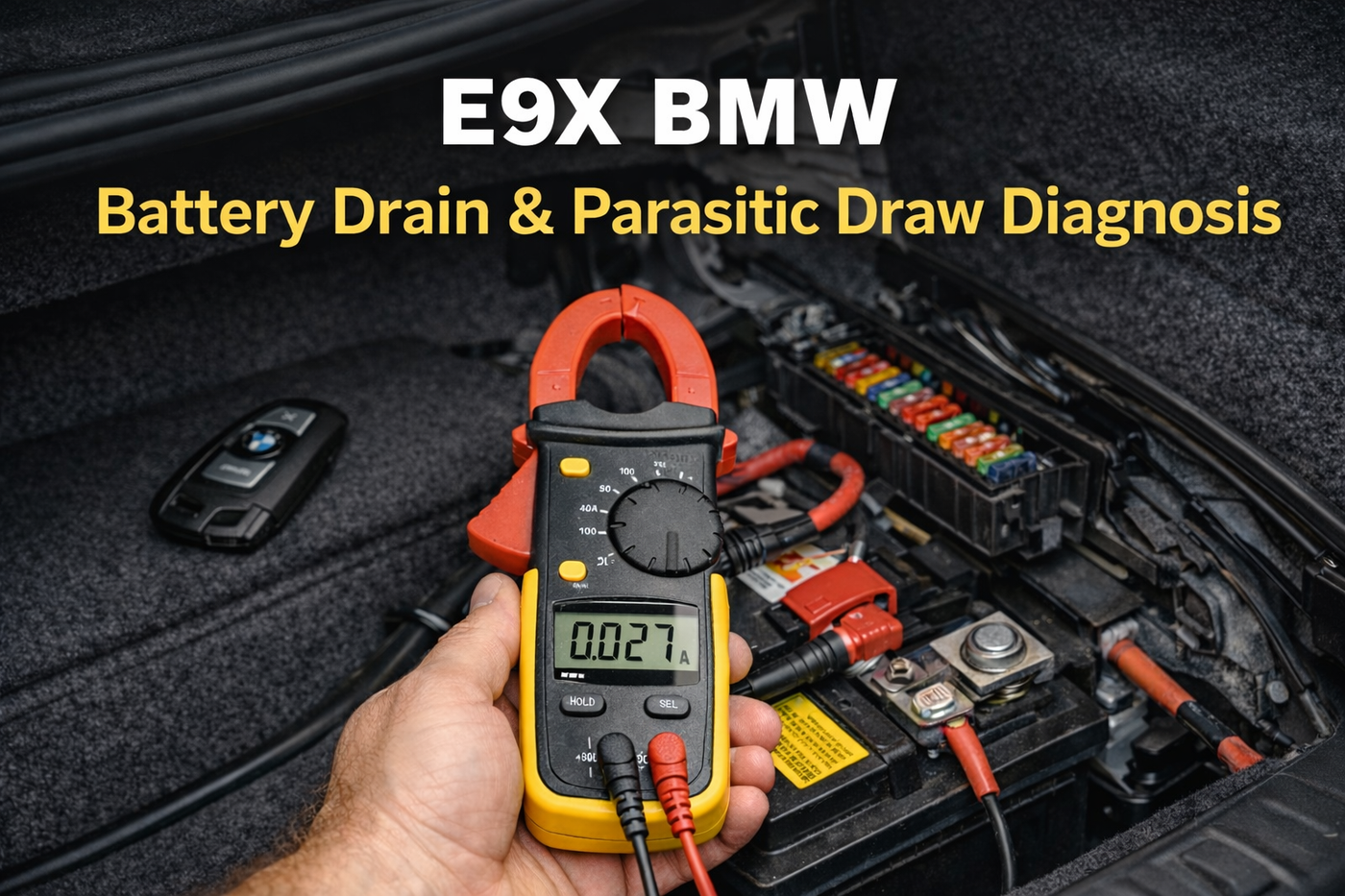
- Optional: Clamp meter for advanced users
A digital multimeter is the most important tool. It will let you measure the electrical current very accurately.
Popular Multimeter Comparison
| Model | Current Range | Ease of Use | Price Range (USD) |
|---|---|---|---|
| Fluke 115 | 0.1 μA to 10A | Easy | $120-$150 |
| Innova 3320 | 0.1 mA to 10A | Very Easy | $25-$40 |
| Klein Tools MM400 | 0.1 mA to 10A | Moderate | $35-$50 |
Any of these will work for parasitic draw testing.
Credit: kadunza.com
Step-by-step Diagnosis Process
Finding a parasitic draw takes patience and careful work. Follow these steps:
1. Prepare The Car
- Park the car in a safe, quiet place
- Remove the keys and close all doors, trunk, and hood
- Wait at least 30-60 minutes for modules to “go to sleep”
- Make sure nothing is charging or plugged in
Waiting is important. Many systems take time to fully power down.
2. Set Up Your Multimeter
- Turn the meter to the DC Amps setting (usually 10A or mA)
- Remove the negative battery cable (black)
- Connect the meter in series—one lead to the battery, the other to the cable
The meter now measures all current leaving the battery. If you see a spark, double-check everything is off.
3. Read The Parasitic Draw
- A normal reading is 20–50 mA
- If you see 80 mA or higher, you have a problem
Some cars “wake up” if you open a door or trigger a sensor. If the reading jumps, wait a few minutes.
4. Locate The Problem Circuit
- Keep the meter connected
- Pull fuses one at a time from the fuse box
- Watch the meter for a sudden drop
When the draw drops, you have found the circuit with the problem.
5. Trace The Fault
- Check the owner’s manual to see what that fuse controls
- Inspect each item on that circuit: Lights, modules, switches, etc.
- Unplug or disconnect parts one by one to see if the draw stops
For example, if the glove box light is stuck on, removing the bulb will stop the draw.
6. Fix Or Replace The Faulty Part
- Repair the wiring, replace the switch, or disconnect the accessory
- Retest with the meter to confirm the draw is back to normal
Never guess or just replace parts. Always measure before and after.
Practical Example: Diagnosing A Trunk Light Issue
Let’s look at a real-world example. A car battery dies every 2 days. The owner notices nothing unusual. Steps:
- Wait 60 minutes after shutting off the car
- Connect the multimeter—reading is 150 mA (too high)
- Pull fuses—when the “interior lights” fuse is removed, the draw drops to 30 mA
- Check all interior lights; the trunk light is hot and stays on
- Replace the trunk light switch
- Retest—reading is now 30 mA (normal)
This method saves time and money, compared to guessing or replacing the battery.
Credit: falkmfg.com
Common Mistakes To Avoid
Many beginners make errors during testing. Here’s what to watch for:
- Not waiting long enough for modules to sleep. Some take 30+ minutes.
- Opening the door or trunk during testing, which wakes up systems.
- Forgetting to switch the meter to the correct range, which can blow a fuse in your meter.
- Pulling multiple fuses at once, making it hard to know which circuit is the problem.
- Not reconnecting everything after testing, causing new problems.
A non-obvious tip: Some cars have hidden fuse boxes (in the trunk, under seats). Always check your car’s manual for all fuse locations.
When To Seek Professional Help
You can solve many parasitic draw problems at home. However, see a professional if:
- The draw is coming from the main computer or ECU
- You find melted wires or burning smell
- The problem is intermittent and hard to catch
- You are not comfortable with electrical systems
Modern cars may need special tools (like scan tools) to diagnose computer-controlled circuits. Some dealers or auto electricians have equipment not available to the public.

Credit: www.fluke.com
How Long Should Battery Last With A Parasitic Draw?
Let’s look at battery life with different draw levels. A typical car battery has about 45 amp-hours (Ah) of capacity.
| Parasitic Draw (mA) | Battery Life (Days) | Real-World Effect |
|---|---|---|
| 25 mA (normal) | >60 days | No issue |
| 100 mA | About 18 days | May start to weaken |
| 300 mA | About 6 days | Battery drains in a week |
| 1,000 mA (1A) | About 1.8 days | Dead in 2 days |
This shows why even a small draw can drain your battery quickly.
Tips For Preventing Parasitic Draw
- Remove all phone chargers and accessories when parking
- Check that all lights turn off when doors/trunk close
- Avoid using non-factory alarms or electronics, unless installed by a pro
- Clean and tighten battery terminals every few months
- If your car sits for weeks, disconnect the battery or use a battery maintainer
A useful tip: After repairs, always recheck the draw to make sure the problem is solved.
Frequently Asked Questions
What Is Considered A Normal Parasitic Draw?
A normal draw is between 20 and 50 milliamps (mA). This is enough to power the clock, radio memory, and security system. Anything above 50 mA should be checked.
Can A Bad Alternator Cause A Parasitic Draw?
Yes, a faulty alternator can cause a draw if a bad diode lets power leak when the car is off. If you have replaced the battery and still have a drain, have the alternator checked.
How Long Does It Take To Test For Parasitic Draw?
Plan for at least 30–60 minutes. You must wait for all systems to sleep before testing, then pull fuses one at a time. Some advanced cars may take longer.
Will Disconnecting The Battery Stop Parasitic Draw?
Disconnecting the battery stops the drain but does not fix the cause. The problem will return once the battery is reconnected. Always find and repair the root issue.
Is There A Quick Way To Check For Parasitic Draw?
Using a clamp meter on the battery cable is a fast way, but less accurate for small draws. The best way is always to use a digital multimeter in series for a clear reading. For more advanced information, visit Wikipedia on Parasitic Draw.
Finding and fixing a parasitic draw saves time, money, and frustration. With patience and the right tools, you can solve most problems yourself. Pay attention to details and always retest after repairs. Your car—and your wallet—will thank you.