
When you turn your steering wheel easily, you might not think about what makes it so smooth. Most modern cars use power steering systems for effortless handling. But what happens when you see red or amber fluid under your car, or the steering becomes stiff? This often means a power steering fluid leak. Ignoring it can lead to expensive repairs or even loss of steering control. Knowing what causes these leaks can save you time, money, and stress.
This guide explains the main causes of power steering fluid leaks, how to spot them, and what you should do next. You’ll also find real-world examples, practical advice, and answers to common questions so you can handle this problem with confidence.
What Is Power Steering Fluid And Why Is It Important?
Power steering fluid is a special hydraulic oil that helps move steering parts. It reduces the effort needed to turn the wheel and protects the system from wear and corrosion. If there’s a leak, the system loses pressure, making the steering heavy or noisy. In severe cases, you could lose steering control, especially at low speeds.
Ignoring a leak is risky. Even a small drip can quickly lead to major damage, including pump failure, steering rack problems, or total system loss. That’s why it’s important to find and fix leaks fast.
Main Causes Of Power Steering Fluid Leaks
Many parts make up the power steering system. Leaks can develop in several places for different reasons. Here are the most common causes:
1. Damaged Or Worn Hoses
The system uses high-pressure hoses to carry fluid between the pump, steering gear, and reservoir. These hoses face heat, pressure, and movement each time you drive.
- Over time, rubber hoses can crack, harden, or become brittle.
- Old clamps can loosen, letting fluid escape.
- Hoses near the engine are more likely to fail due to extra heat.
Real example: A 10-year-old sedan with original hoses may develop small cracks in the rubber, causing slow leaks that get worse over months.
2. Loose Or Bad Hose Connections
Even if hoses are in good shape, the fittings where they attach can leak.
- Vibration from the engine can loosen connections.
- Corrosion or dirt can prevent a tight seal.
- After repairs, connections may not be tightened enough.
Check for fluid around connection points. If you see wetness or drips, tightening the fitting or replacing a washer might solve the problem.
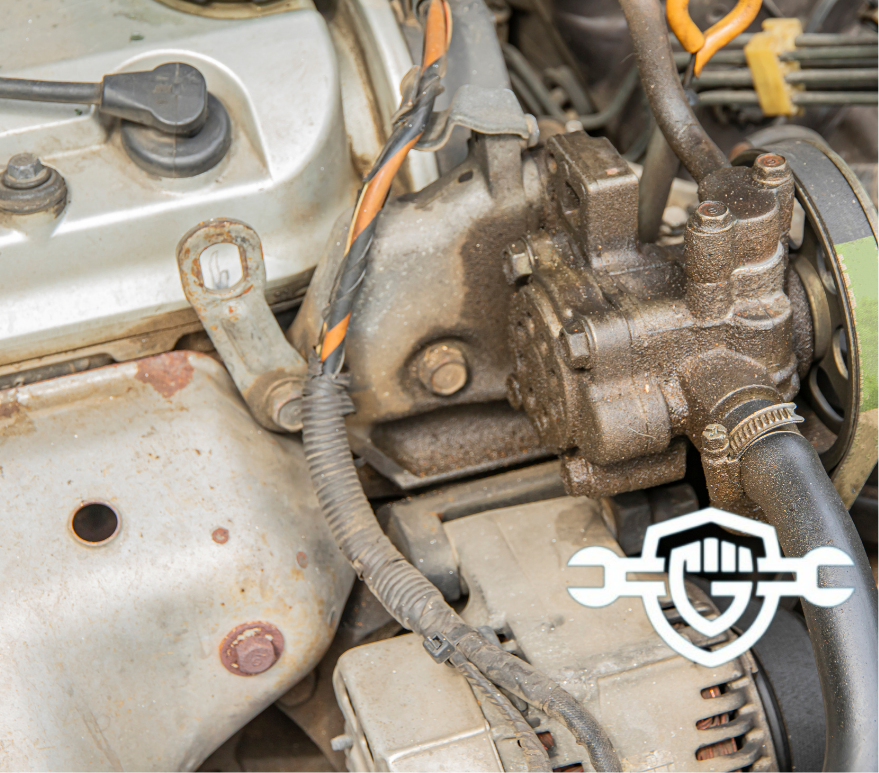
3. Failing Power Steering Pump
The power steering pump pushes fluid through the system. It has internal seals and a shaft that can wear out.
- A worn pump seal lets fluid leak out, often near the pulley.
- If you hear whining noises while turning, your pump may be low on fluid or starting to fail.
A bad pump not only leaks but also reduces steering performance. Replacing the pump is usually the only fix.
4. Faulty Steering Rack Or Gearbox Seals
The steering rack (or gearbox in some trucks) has several seals to keep fluid inside.
- Seals can dry out or crack with age, especially in hot or cold climates.
- Dirt and grit can wear away at the seal surface.
- Rack leaks often show up as fluid on the rubber boots at either end.
These leaks are harder to repair and may require rebuilding or replacing the rack.
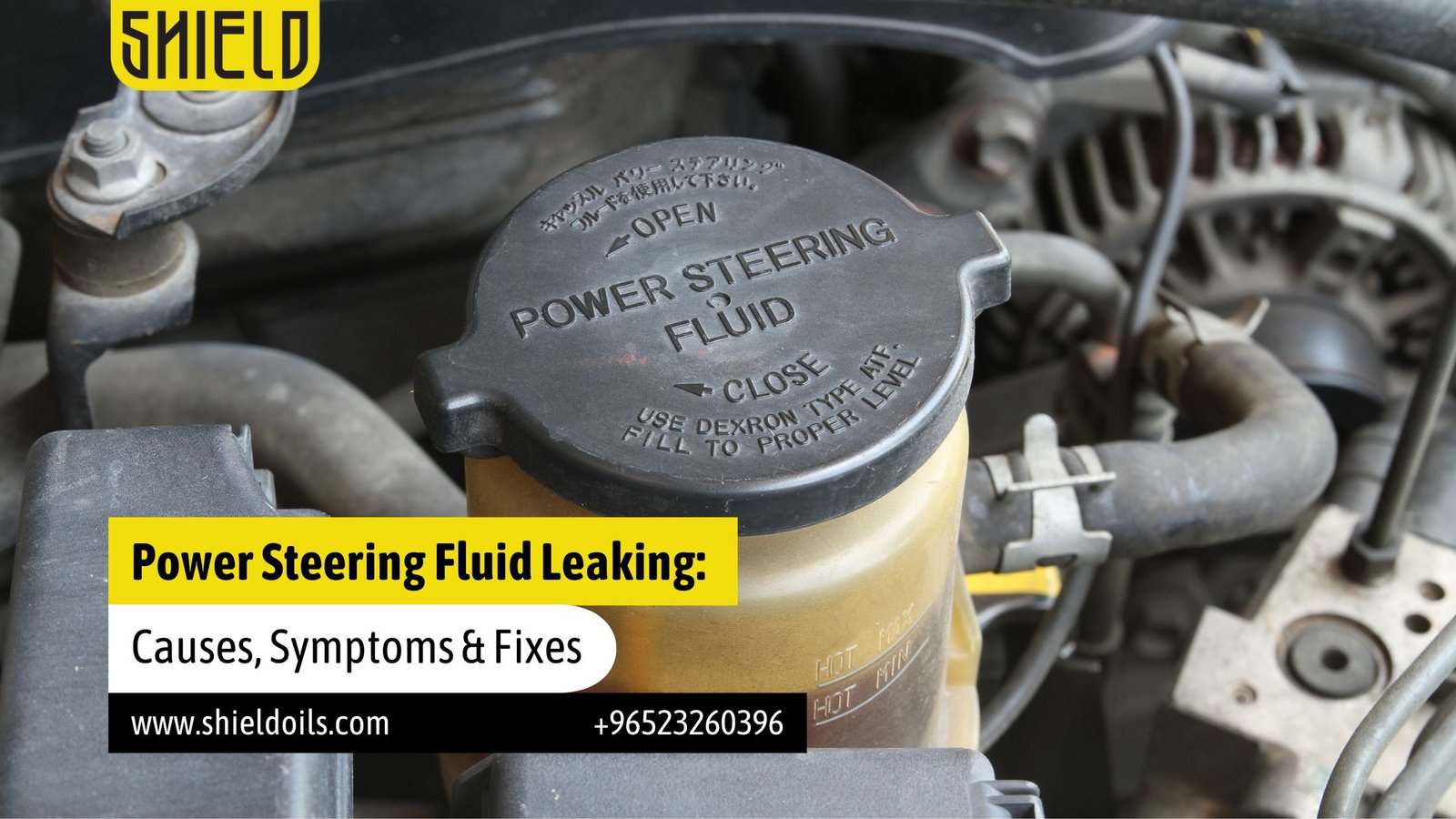
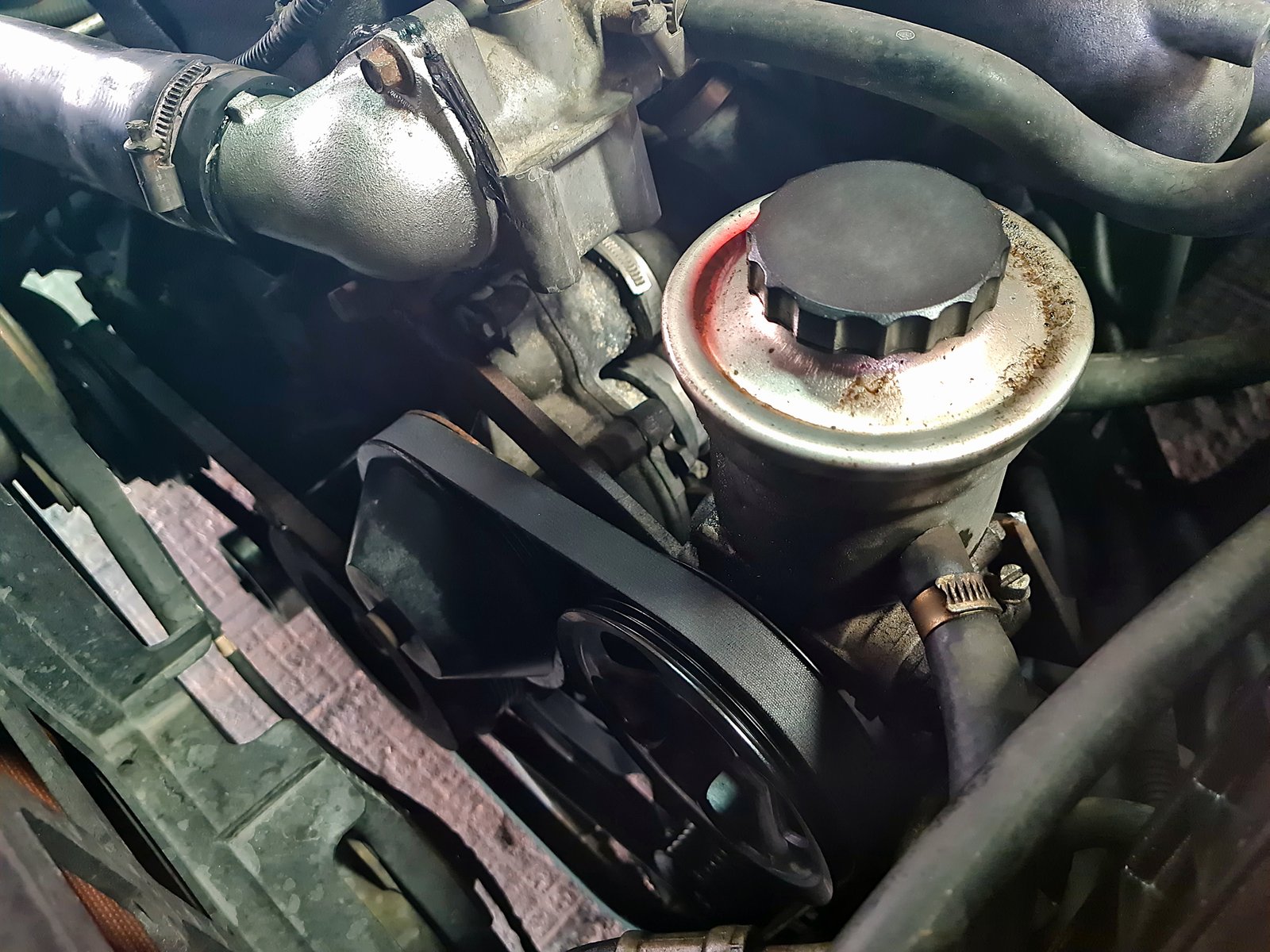
5. Cracked Or Damaged Reservoir
The fluid reservoir stores extra power steering fluid. Most are plastic or metal.
- Plastic reservoirs can crack with age or after minor impacts.
- The cap or its gasket can also leak if not closed properly.
Look for fluid under the reservoir or on the engine bay. Reservoir leaks are usually easy to spot.
6. Worn Or Broken O-rings And Gaskets
Many parts use O-rings and gaskets to seal joints.
- Heat and old age can harden these rubber pieces.
- A missing or pinched O-ring after repairs can cause leaks right away.
Replacing O-rings is simple and cheap, but finding the exact location may take time.
7. Overfilled Or Wrong Fluid
Too much fluid or the wrong type can cause leaks.
- Overfilling raises the pressure, forcing fluid past seals.
- Some fluids swell or damage rubber parts if not designed for your system.
Always use the fluid type listed in your owner’s manual. Check the level after repairs or fluid changes.
8. Damage From Accidents Or Road Debris
Impacts from accidents or hitting road debris can damage hoses, the reservoir, or the rack.
- Even a small fender bender can bend parts or break seals.
- Rocks or sticks can puncture exposed hoses under the car.
If you notice a leak after hitting something, check all steering parts carefully.
9. Rust And Corrosion
Rust is a big problem in areas with road salt or high humidity.
- Metal lines and parts can corrode, leading to pinhole leaks.
- Corroded hose clamps may no longer seal properly.
Inspect metal parts for orange or brown stains, which often show the start of a leak.
10. Faulty Power Steering Pressure Switch
Some cars use a pressure switch to monitor system pressure.
- The switch uses a rubber seal, which can fail and leak.
- This is often near the pump or rack and may drip onto the ground or engine.
Switch leaks are less common but can be confused with other leak sources.
11. Improper Installation After Repairs
After repairs, incorrect assembly can create leaks.
- Missing O-rings, loose clamps, or poorly seated hoses are common mistakes.
- Some mechanics may use too much force and crack plastic parts.
Always double-check after work on the power steering system.
12. Aging And Lack Of Maintenance
Simple age is a big reason for leaks.
- Rubber and plastic shrink, harden, or crack over years.
- Not changing fluid lets dirt and water build up, speeding up wear.
Regular checks and fluid changes can prevent many leaks.
Credit: www.greatwater360autocare.com
How To Identify A Power Steering Fluid Leak
Spotting a leak early can prevent bigger problems. Here’s how to check for power steering leaks:
- Look for fluid puddles under your car—usually red, pink, or amber.
- Listen for whining noises when turning the wheel.
- Feel for stiff or jerky steering.
- Smell for a burnt oil odor under the hood.
- Check the fluid level in the reservoir regularly.
If you see any of these signs, it’s time to inspect the system closely or visit a mechanic.
Where Do Leaks Most Often Occur?
To help you spot leaks faster, here’s a quick comparison of where leaks happen and how easy they are to fix:
| Leak Location | Common Cause | Repair Difficulty |
|---|---|---|
| Hoses | Cracks, loose clamps | Easy to Moderate |
| Pump | Seal failure | Moderate to Hard |
| Rack/Gearbox | Worn seals | Hard |
| Reservoir | Cracks | Easy |
| O-Rings/Gaskets | Age, heat | Easy |
Credit: shieldoils.com
How Fast Do Power Steering Leaks Get Worse?
Not all leaks are the same. Some drip slowly, while others empty the reservoir quickly.
| Leak Type | Fluid Loss Rate | Time to Failure |
|---|---|---|
| Small hose crack | 1-2 drops/day | Weeks to months |
| Pump shaft seal leak | 1-2 oz/day | Days to weeks |
| Major rack leak | 10+ oz/day | Hours to days |
Tip: If you need to add fluid more than once a week, fix the leak soon.
What Can Happen If You Ignore A Leak?
Letting a power steering fluid leak go unfixed can lead to:
- Steering failure: You may lose power assist, making turns very hard.
- Pump damage: Running dry destroys the pump quickly.
- Expensive repairs: Leaking fluid can damage other car parts, like belts or the alternator.
- Accidents: Hard steering at low speeds can cause crashes, especially in tight spots.
Non-obvious insight: Power steering fluid is flammable. Leaks onto a hot exhaust can sometimes cause fires.
Credit: auto.howstuffworks.com
How To Prevent Power Steering Fluid Leaks
While you can’t stop all leaks, these habits help:
- Check fluid levels monthly.
- Look for leaks after oil changes or repairs.
- Use only the recommended fluid.
- Replace hoses and seals every 5-7 years, especially in hot climates.
- Clean the engine bay to spot leaks early.
Pro tip: If your system is old but not leaking, a mechanic can add a seal conditioner to keep rubber parts soft. This is not a permanent fix but can delay leaks.
When To See A Mechanic
Some leaks are easy to fix at home (like a loose clamp or reservoir cap). But if you can’t find the leak, or if the steering feels unsafe, see a professional. Modern cars often need special tools to bleed the system and reset sensors.
A good mechanic will also check for hidden damage and test the system after repairs.
For more on steering systems, check the Wikipedia Power Steering page.
Frequently Asked Questions
What Color Is Power Steering Fluid?
Most power steering fluid is red, amber, or pink when new. Old fluid may look brown or dark gray. If you see fluid of these colors under your car, check the power steering reservoir first.
Can I Drive With A Power Steering Fluid Leak?
You can drive short distances if the leak is small and the steering feels normal. But if the steering gets hard or noisy, stop and check the fluid. Driving with no fluid can damage the pump or rack and is unsafe.
How Much Does It Cost To Fix A Power Steering Fluid Leak?
Costs vary by car and leak location:
- Hose or O-ring: $50–$200
- Pump: $300–$600
- Rack/gearbox: $500–$1200
Labor is a big part of the price. Fixing leaks early is always cheaper.
How Do I Know If My Power Steering Pump Is Leaking?
Look for fluid under the pump or on the drive belt. Listen for whining or groaning sounds when you turn the wheel. Check for drops in fluid level and harder steering at low speeds.
What Happens If I Use The Wrong Power Steering Fluid?
The wrong fluid can damage seals, cause leaks, or make the steering noisy. Always use the type shown in your owner’s manual. Some cars need synthetic or special fluids.
A power steering fluid leak is more than a small problem—it’s a warning sign. By understanding the causes, checking for leaks, and acting quickly, you can keep your steering safe and repairs affordable. Regular care pays off, keeping your car easy to drive for years to come.