
recommended tire pressure for my car is a common question. In this guide, you’ll get a clear, practical breakdown before we dive into the main sections.
Why Correct Tire Pressure is a Critical Safety Check
Maintaining the correct tire pressure is one of the most fundamental and impactful aspects of vehicle maintenance. It’s a simple check that directly influences your car’s safety, handling, and efficiency. When tires are not inflated to the manufacturer’s specifications, it can lead to a host of problems that compromise your control on the road.
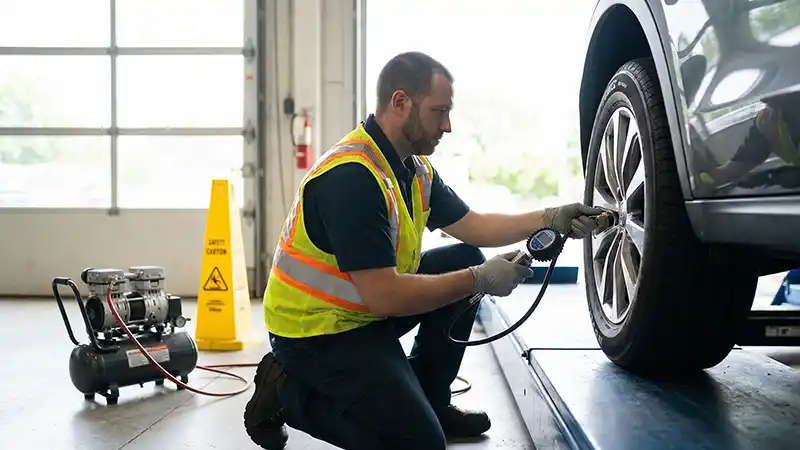
Underinflated tires are a significant safety hazard. The tire’s sidewalls flex excessively, generating a dangerous amount of heat. This can lead to premature wear, tread separation, and catastrophic tire failure or a blowout, especially at highway speeds. Furthermore, low pressure reduces steering responsiveness, increases stopping distances, and negatively impacts fuel economy by increasing rolling resistance.
Conversely, overinflated tires create a smaller contact patch with the road surface. This reduces traction and can lead to a harsh, bumpy ride. The center of the tire tread will wear out more quickly than the edges, shortening the tire’s lifespan. An overinflated tire is also more susceptible to damage from potholes and other road hazards.
Where to Find the Recommended Tire Pressure for My Car
Locating the correct inflation pressure for your vehicle is straightforward, as manufacturers provide this crucial information in several accessible places. The most reliable and common location is the tire information placard, a sticker permanently affixed to the vehicle. You will almost always find this sticker on the driver’s side door jamb, visible when you open the door.
If the sticker is not on the door jamb, check a few other potential locations:
- The owner’s manual: Your vehicle’s manual will have a dedicated section on wheels and tires that lists the recommended pressures.
- Glove compartment door: Some manufacturers place the information sticker on the inside of the glove box door.
- Fuel filler door: Less common, but on some vehicles, especially European models, the sticker may be on the inside of the gas cap door.
It is essential to use the pressure recommended by the vehicle manufacturer, not a generic number. This specification is tailored to your car’s specific weight, size, and handling characteristics to provide the best balance of safety, performance, and ride comfort.
Decoding Your Car’s Tire Information Placard
The tire information placard contains more than just the recommended pressure. Understanding all the information on this sticker can help you better maintain your vehicle. While layouts vary slightly between manufacturers, they typically include the same key details.
Here’s what you’ll usually find:
- Recommended Cold Tire Inflation Pressure: This is the main piece of information you need. It will be listed in PSI (Pounds per Square Inch) and often in kPa (kilopascals). It will specify the pressure for the front and rear tires. Note that sometimes the front and rear pressures are different.
- Original Equipment (OE) Tire Size: The sticker lists the size of the tires that came with your vehicle from the factory (e.g., P225/60R17). This is crucial for ensuring you have the correct size tires installed.
- Vehicle Capacity Weight: This indicates the maximum combined weight of occupants and cargo that the vehicle is designed to carry safely.
- Seating Capacity: It will also show the maximum number of occupants for the front and rear seats.
Always refer to the ‘cold’ tire pressure. This means checking the pressure when the car has been parked for at least three hours or has been driven for less than a mile. Driving heats up the tires, which increases the air pressure inside and will give you an inaccurate reading.
Tire Sidewall vs. Door Sticker: Don’t Make This Common Mistake
One of the most frequent and dangerous mistakes car owners make is using the pressure value printed on the tire’s sidewall. The number on the tire is not the recommended operating pressure; it is the maximum cold inflation pressure the tire can safely contain. Inflating your tires to this maximum limit can create a hazardous driving situation.
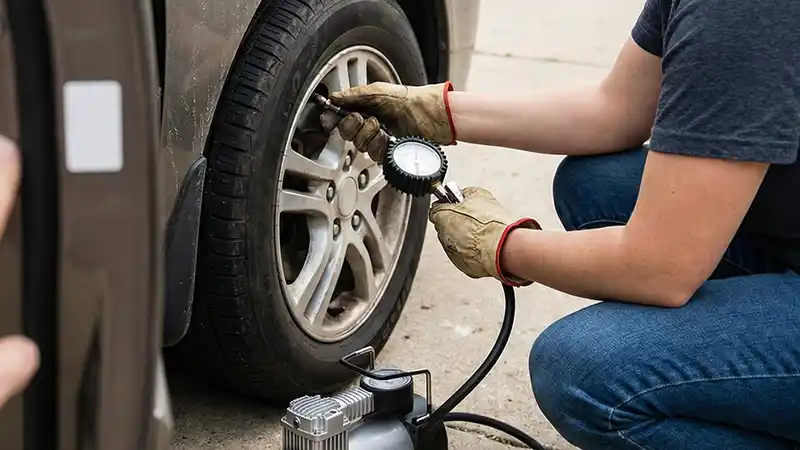
Using the maximum pressure listed on the tire will result in significant overinflation for most vehicles. This leads to a harsh ride, severely reduced traction, and uneven wear. The vehicle’s suspension and handling are designed to work with the pressure specified on the door jamb sticker. Using a much higher pressure can make the car feel unstable and increase the risk of losing control.
To be clear: always use the pressure recommended by the vehicle manufacturer on the door jamb placard or in the owner’s manual. The number on the tire sidewall is a safety limit for the tire itself, not a recommendation for your specific car.
How to Check Your Tire Pressure in 5 Simple Steps
Checking your tire pressure is a quick and easy process that anyone can do. All you need is a reliable tire pressure gauge, which can be a simple pencil-style gauge, a dial gauge, or a digital gauge. For the most accurate results, always check the pressure when the tires are cold.
- Start with Cold Tires: For an accurate reading, check your tires before you’ve driven for the day or after the car has been parked for at least three hours.
- Find the Recommended PSI: Locate your vehicle’s recommended tire pressure on the sticker in the driver’s side door jamb. Remember to note if the front and rear pressures are different.
- Remove the Valve Cap: Unscrew the small plastic or metal cap from the tire’s valve stem. Keep it in a safe place, like your pocket, so you don’t lose it.
- Press the Gauge Firmly: Press the tire pressure gauge onto the valve stem. You should hear a brief hiss of air as you press down. Ensure the gauge is pressed on straight and firmly to get a proper seal and an accurate reading.
- Read the Pressure: Note the reading on your gauge. Compare this number to the recommended PSI from the door sticker. Repeat this process for all four tires, and don’t forget the spare tire if your vehicle has one.
A Practical Guide to Adjusting Tire Pressure
After checking your tires, you may find they need air added or removed. This is also a simple task that can be done at home with an air compressor or at most gas stations.
Adding Air to Your Tires
If the pressure is low, you need to add air. Many gas stations have air compressors, some of which are free to use. You can also purchase a portable compressor that plugs into your car’s 12V outlet.
- Press the air hose nozzle onto the valve stem. Most nozzles have a lever you need to press or flip to start the flow of air.
- Add air in short bursts, removing the hose to re-check the pressure with your separate gauge after each burst.
- Do not rely on the gauge built into the gas station air hose, as they are often inaccurate from heavy use and exposure to the elements.
- Continue until you reach the recommended PSI. If you add too much, don’t worry—you can easily let some out.
Releasing Air from Your Tires
If the pressure is too high, you need to release some air. This is even easier than adding it.
- Using the small nub on the back of many pencil or dial gauges, or the tip of a small tool like a screwdriver, press down on the metal pin in the center of the valve stem.
- You will hear air escaping. Release air in short bursts of just a few seconds at a time.
- Re-check the pressure with your gauge. Repeat until you reach the correct PSI.
- Once the pressure is correct for all tires, screw the valve caps back on securely. They protect the valve mechanism from dirt and moisture.
How Temperature Fluctuations Affect Your Tire’s PSI
Have you ever noticed your Tire Pressure Monitoring System (TPMS) light comes on during the first cold morning of the fall? This is due to the direct relationship between temperature and air pressure. As the ambient temperature drops, the air inside your tires contracts, causing the pressure to decrease.
A general rule of thumb is that for every 10°F (Fahrenheit) change in outside temperature, your tire pressure will change by about 1 PSI. So, a 30°F drop from a warm afternoon to a cold morning can cause your tire pressure to drop by 3 PSI, which is often enough to trigger the TPMS warning light.
Because of this, it’s important to check your tire pressure more frequently as the seasons change. Always adjust the pressure to the recommended cold inflation level listed on your door placard. When you know a cold snap is coming, it’s a good idea to check your tires and top them off as needed.
Do You Need to Adjust Tire Pressure for Heavy Loads or Towing?
Yes, in many cases, you should adjust your tire pressure when carrying a heavy load or towing a trailer. Your vehicle’s manufacturer has likely accounted for this. Check your owner’s manual or the tire information placard for a ‘heavy load’ or ‘towing’ inflation pressure recommendation.
This alternate pressure is typically higher than the normal operating pressure. Increasing the pressure helps the tires better support the additional weight, preventing excessive flexing of the sidewalls and ensuring vehicle stability. It helps maintain proper handling and braking performance under load. Once you have unloaded the vehicle or are no longer towing, remember to return the tire pressure to the normal recommended setting for optimal ride comfort and tire wear.
Common Myths and Mistakes About Tire Inflation
Several misconceptions about tire pressure can lead to improper maintenance and unsafe driving conditions. It’s important to separate fact from fiction.
- Myth: You can tell if a tire is low just by looking at it. Fact: Modern radial tires can be significantly underinflated without looking flat. You must use a pressure gauge for an accurate measurement.
- Myth: The pressure on the tire’s sidewall is the correct pressure. Fact: As discussed, this is the maximum pressure the tire can hold, not the recommended pressure for your vehicle. Always use the door jamb sticker.
- Myth: All tires on a car should be at the same pressure. Fact: While often true, some vehicles specify different pressures for the front and rear tires. Always check the placard.
- Myth: If you fill your tires with nitrogen, you never have to check the pressure. Fact: Nitrogen is less susceptible to temperature changes and permeates through rubber slower than oxygen, but it is not a ‘set it and forget it’ solution. You should still check tires filled with nitrogen monthly.
Frequently Asked Questions About Car Tire Pressure
Here are answers to some of the most common questions about maintaining your vehicle’s tire pressure.
What is the recommended tire pressure for my car in hot or cold weather?
The recommended tire pressure listed on your car’s door sticker is for cold tires, regardless of the season. However, because temperature affects pressure, you should check it more often in extreme weather. In winter, you will likely need to add air more frequently to maintain the recommended cold PSI.
Should I use the PSI on the tire itself or the car’s sticker?
Always use the PSI recommended on your car’s sticker located on the driver’s side door jamb. The pressure value on the tire’s sidewall is the maximum pressure the tire can safely hold, which is not the correct operating pressure for your specific vehicle.
How often should I check to see if I have the recommended tire pressure?
It is best practice to check your tire pressure at least once a month and before any long road trips. Regular checks help you catch slow leaks early and ensure your tires are always properly inflated for safety and efficiency.
Does the recommended tire pressure for my car change if I buy new tires?
If you replace your old tires with new ones of the exact same size and type as the original equipment, the recommended pressure on your door sticker remains the correct one to use. If you change to a different size or type of tire, consult with a professional tire installer for their recommendation.
Is it better to overinflate or underinflate tires if I can’t get the exact recommended pressure?
Neither is ideal, and you should always aim for the exact recommended pressure. However, severe underinflation is far more dangerous as it can lead to overheating and blowouts. Slight overinflation is generally less hazardous than significant underinflation, but it will still negatively affect traction and tire wear.
Why is my TPMS light on if my tire pressure seems fine?
The TPMS light can illuminate for several reasons. It may be that one or more tires are just below the system’s warning threshold (often 25% below the recommended PSI), a recent significant drop in temperature caused a temporary low reading, or there could be a malfunction with one of the TPMS sensors or the system itself.
Conclusion
Consistently maintaining the recommended tire pressure for your car is a simple yet vital task for any vehicle owner. By using the manufacturer’s specification found on the driver’s door jamb sticker and checking your tires monthly when they are cold, you ensure optimal safety, handling, and fuel efficiency. This small investment of time prevents premature tire wear and protects you from dangerous on-road failures.
Make checking your tire pressure a regular part of your vehicle care routine. It’s one of the easiest and most effective ways to contribute to your car’s longevity and your safety on the road. If you are ever unsure or your TPMS light stays on after adjusting the pressure, consult a trusted mechanic for a professional inspection.
{“@context”:”https://schema.org”,”@type”:”Article”,”headline”:”What is the Recommended Tire Pressure for My Car? A Complete Guide”,”mainEntityOfPage”:”https://autofixnotes.com/?p=1109″,”datePublished”:”2025-12-12T21:09:50+00:00″,”dateModified”:”2025-12-12T21:09:50+00:00″}