
Summer Car Maintenance Checklist
Hot summer days can be tough on your car, especially if you’re not prepared. High temperatures, long road trips, and sudden rainstorms can all create problems for vehicles old and new. Many drivers only think about car maintenance in winter, but summer car care is just as important. If you want to avoid breakdowns, keep your passengers safe, and protect your investment, following a proper checklist for summer car maintenance is essential.
This guide will show you exactly what to check, why it matters, and how to get your car summer-ready. Even if you’re not a car expert, these simple tips and checks will help you drive with confidence all season long.
Why Summer Car Maintenance Is Important
Summer heat can damage your car in ways you may not expect. Fluids evaporate faster, tire pressure changes with the temperature, and engines can overheat if not cared for. According to the American Automobile Association (AAA), the chance of a car breakdown rises by 20% during the summer months. That means regular maintenance isn’t just about keeping your car looking good—it’s about preventing breakdowns and staying safe.
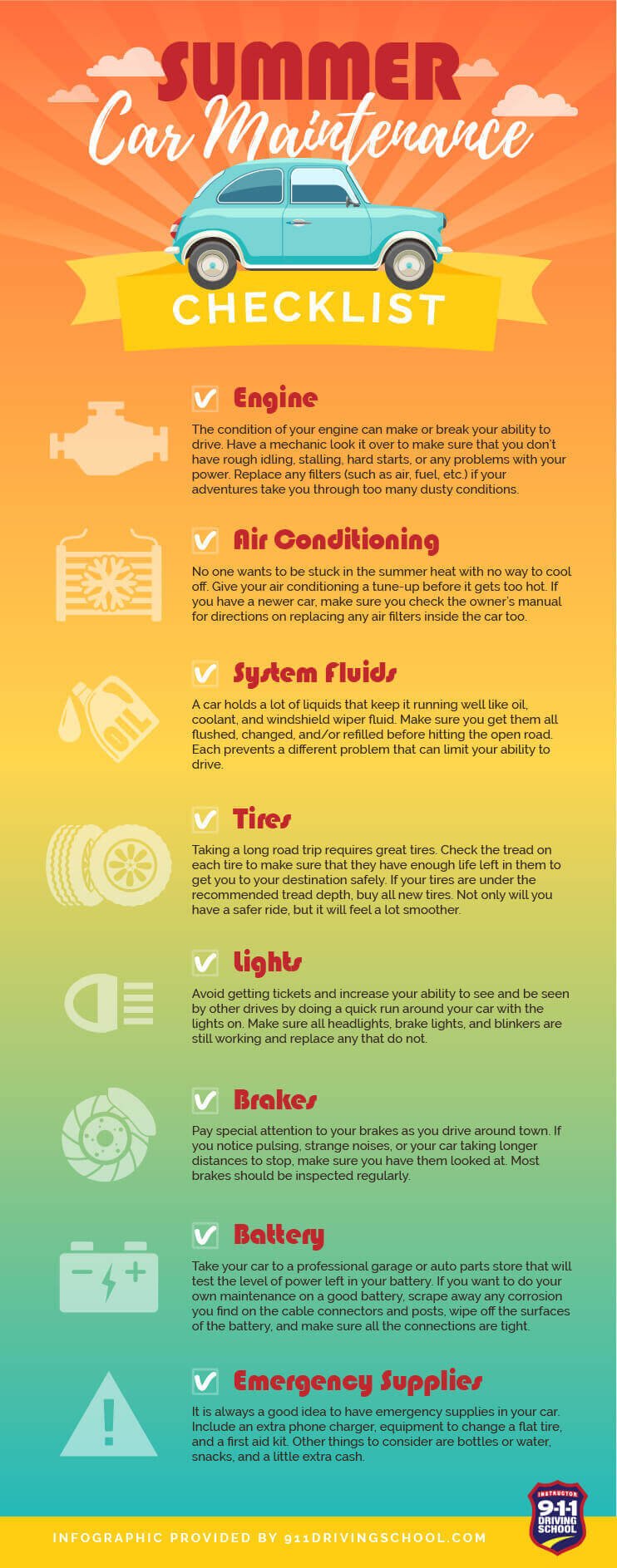
Essential Summer Car Maintenance Checklist
Let’s go step by step through the most important things you should check or service before and during the summer.
1. Engine Oil And Filter
Oil keeps your engine running smoothly, reducing friction and heat. In summer, engines work harder and can run hotter, so old or low oil levels can lead to damage. Check your oil level at least once a month and top up if needed.
Change the oil and oil filter according to your car’s manual—usually every 5,000 to 7,500 miles. Use the oil type recommended for summer temperatures; some cars use thicker oil in hot weather.
Non-obvious tip: If you drive in stop-and-go traffic or make frequent short trips, your oil breaks down faster. Consider changing it more often in summer.
2. Coolant (antifreeze) System
Your engine’s cooling system is the key to stopping overheating. Coolant (a mix of water and antifreeze) absorbs engine heat and keeps everything at the right temperature. Before summer starts, check your coolant level and look for leaks under the car.
If your coolant looks rusty or dirty, flush the system and refill it. Most cars need a coolant change every 2 years.
Insight: Many people forget that a low coolant level can be caused by a small leak, not just evaporation. Inspect hoses and the radiator for cracks or soft spots.
3. Battery Health
Summer heat is rough on car batteries. High temperatures make the battery fluid evaporate faster, which can damage internal parts and shorten battery life. Test your battery’s charge if it’s more than 3 years old, or if you notice slow starts.
Clean the battery terminals to remove corrosion.
Practical tip: Carry a set of jumper cables or a portable jump starter in your trunk, just in case.
4. Tires: Pressure, Tread, And Condition
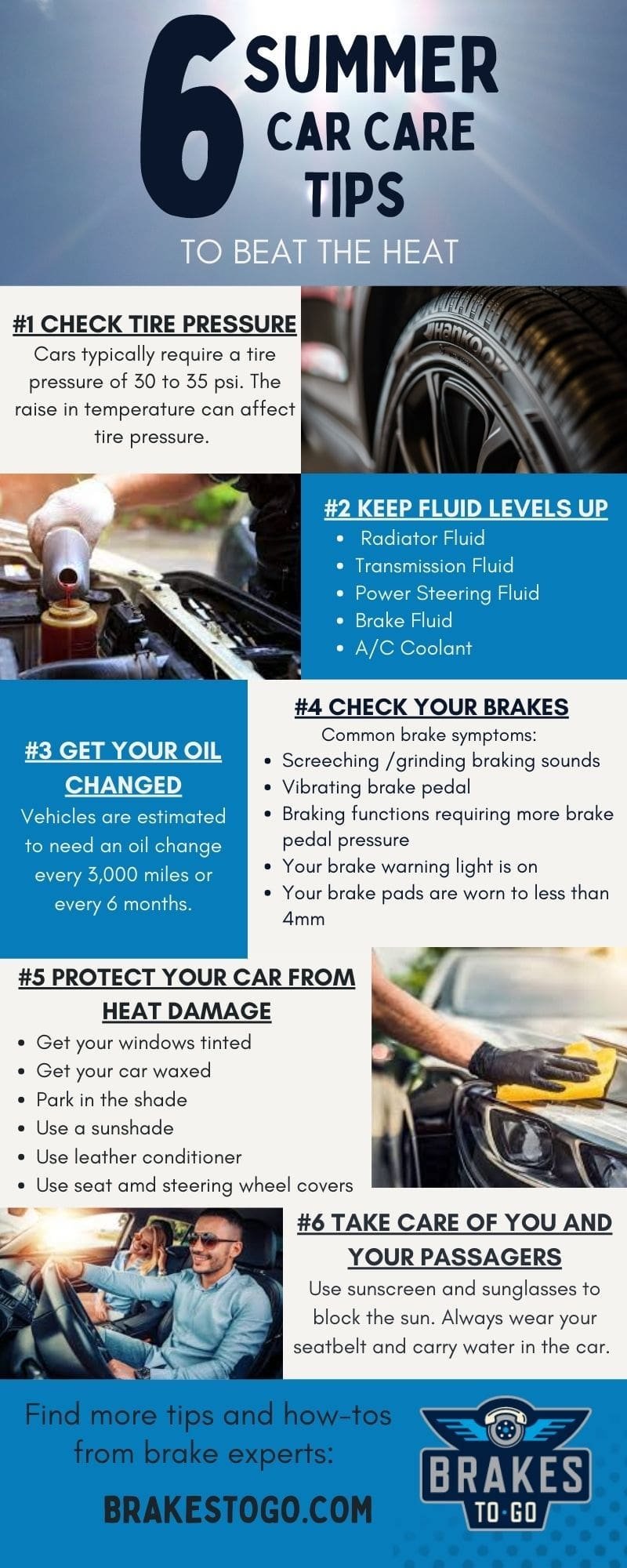
Tires are your car’s only contact with the road, so they must be in good shape. Heat causes air in tires to expand, which can lead to overinflation. Check your tire pressure at least twice a month and adjust to the level shown on your car’s door sticker.
Also, inspect the tread depth—tires with less than 2/32 inch of tread are unsafe, especially in summer rain.
Here’s a quick comparison of summer tire safety checks:
| Tire Check | Why It Matters | How Often |
|---|---|---|
| Pressure | Prevents blowouts and uneven wear | Every 2 weeks |
| Tread Depth | Improves grip in rain | Monthly |
| Sidewall Condition | Stops sudden tire failure | Monthly |
Pro tip: Don’t forget to check your spare tire’s pressure too.
5. Air Conditioning System
A working air conditioner isn’t just about comfort—it can be a safety issue in extreme heat. If your A/C isn’t cooling well, have it checked for leaks or low refrigerant. Clean or replace the cabin air filter to keep airflow strong and reduce allergens.
Common mistake: Many drivers wait until the hottest day to test their A/C, but it’s better to check early so repairs don’t leave you sweating.
6. Windshield Wipers And Washer Fluid
Summer storms can hit without warning. Old wipers leave streaks and can’t clear heavy rain. Replace your wiper blades every 6-12 months, or sooner if they squeak or leave streaks. Top up your washer fluid with a bug-removing formula for summer driving.
Bonus tip: Don’t use plain water in the washer tank—it can promote algae growth and may freeze in cooler weather.
7. Brakes
Hot weather can affect brake performance, especially during long downhill drives. Listen for squealing or grinding sounds, which may mean your brake pads are worn. Soft or spongy brake pedals can signal a fluid leak. Get your brakes checked at least once each summer.
8. Lights And Signals
Long summer days mean more driving at dusk or night. Check all exterior lights, including headlights, brake lights, turn signals, and hazard lights. Replace any burned-out bulbs right away.
Not obvious: Dirty headlights can reduce brightness by up to 50%. Clean plastic covers with a headlight restoration kit if they look cloudy.
9. Belts And Hoses
Engine belts and hoses are made of rubber, which can crack or break in high temperatures. Look for signs of wear: cracks, fraying, or glazing (shiny surfaces). Squeeze hoses—if they feel soft or squishy, they may be close to failing. Replace any worn parts before summer trips.
10. Transmission And Power Steering Fluids
These fluids help your car shift gears smoothly and steer easily. High heat can cause them to thin out and lose effectiveness. Check levels and top up if needed. If you see dark or burnt-smelling fluid, change it soon.
11. Air Filter
A clean air filter helps your engine “breathe” and work efficiently. Dust and pollen are high in summer, so check your air filter every 12,000 to 15,000 miles, or sooner if you drive on dirt roads. Replace it if it looks dirty or clogged.
12. Exterior And Paint Protection
Sun and heat can fade your car’s paint and damage rubber parts. Wash your car regularly to remove dust and bugs, then apply a coat of wax for protection. Park in the shade or use a windshield sunshade to keep the interior cooler.
13. Interior Care
High temperatures can crack dashboards, fade fabrics, and melt plastics. Use sunshades, seat covers, and clean the interior with UV-protectant sprays. If you have leather seats, condition them to stop drying and cracking.
14. Emergency Kit Update
Summer emergencies are different from winter. Include water bottles, sunscreen, a hat, a flashlight, and a basic first aid kit. Add a reflective warning triangle and a phone charger. Keep your regular emergency tools and jumper cables.
Here’s a sample summer emergency kit:
| Item | Purpose |
|---|---|
| Water bottles | Stay hydrated |
| Sunscreen | Protect skin |
| Hat/cap | Reduce sun exposure |
| First aid kit | Handle minor injuries |
| Phone charger | Emergency calls |
15. Fuel System
Hot weather can cause fuel to evaporate from the tank and lines, especially in older cars. Make sure your gas cap seals tightly to prevent leaks and fuel vapor loss. If your car smells like gasoline or has trouble starting, have the fuel system checked.
Less-known fact: A loose gas cap is one of the most common reasons for the “check engine” light to turn on.
16. Exhaust System
Road trips and hot weather can shake loose old exhaust parts. Listen for loud noises or rattling sounds, which can mean a hole or loose part. A leaking exhaust is dangerous, so repair problems quickly.
17. Alignment And Suspension
Hitting potholes or curbs in summer can knock your wheels out of alignment. If your steering wheel shakes or your car pulls to one side, get your alignment checked. This also helps your tires last longer.
18. Check For Recalls
Before any long summer trip, check if your car has any open recalls. Many drivers ignore recall notices, but these fixes are free and can prevent serious problems. You can check for recalls by entering your car’s VIN on the official NHTSA website or at your dealership.
19. Plan For Extreme Weather
Summer isn’t just about heat. Sudden rain, hail, or dust storms can happen. Know the weather forecast before driving long distances. Carry extra supplies and adjust your driving to conditions.
20. Review Your Insurance And Registration
Make sure your car’s registration, insurance, and roadside assistance plans are up to date. Keep copies in your glove box. If you’re traveling out of state or country, check if you need extra coverage.
Credit: www.thezebra.com
Cost Of Skipping Summer Car Maintenance
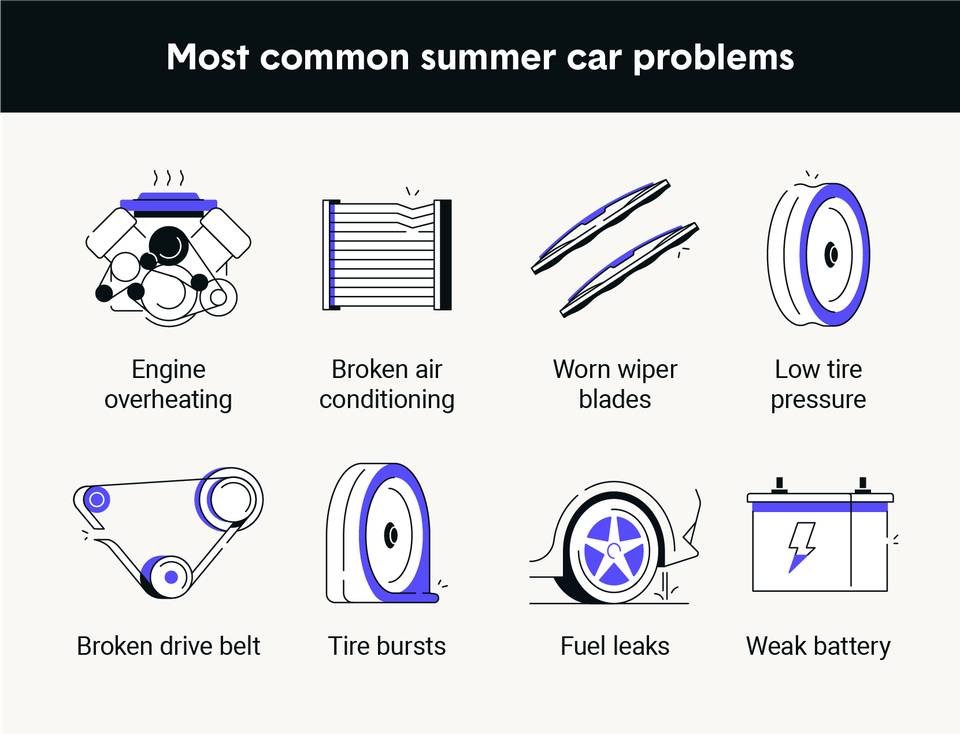
Neglecting car care in summer can be expensive. According to AAA, engine overheating and tire blowouts are among the top causes of roadside breakdowns in hot weather. The average cost to repair a blown engine can exceed $3,000, while a new set of tires might cost $400–$800.
A few minutes of preventive checks can save you a lot of money and stress later.
Here’s a quick data table comparing the cost of fixing common summer car problems:
| Problem | Average Repair Cost (USD) | Prevention Tip |
|---|---|---|
| Engine Overheating | $1,000–$3,500 | Check coolant, belts, hoses |
| Tire Blowout | $100–$600 per tire | Maintain tire pressure |
| A/C Repair | $200–$1,000 | Test system early |
Summer Car Maintenance For Different Car Types
Not all cars need the same summer checks. For example:
- Electric vehicles (EVs): Batteries can overheat. Park in the shade and avoid full charges during hot afternoons.
- Older cars: Rubber parts (belts, hoses) are more likely to crack in heat.
- Luxury/sports cars: High-performance tires can wear out faster in summer.
Always follow your car’s manual for special summer tips.
Credit: brakestogo.com
Two Insights Most Drivers Miss
- Timing is critical. Many drivers wait until they have a problem to check their car. Doing a full check before the first heatwave can prevent most summer breakdowns.
- Fluid checks aren’t just for oil and coolant. Windshield washer, brake, power steering, and transmission fluids all matter in summer. Low or old fluid can cause sudden failures.
Where To Learn More
For more details about car fluids and maintenance, check the official NHTSA Vehicle Maintenance page.
Credit: 911drivingschool.com
Frequently Asked Questions
How Often Should I Check My Tire Pressure In Summer?
Check your tire pressure every two weeks. Heat causes tires to expand, which can change pressure quickly. Always check when tires are cold for the most accurate reading.
Is It Safe To Drive If My A/c Is Not Working?
You can drive, but it’s not recommended in high heat, especially with children or pets. Extreme heat inside a car can be dangerous. Get your A/C fixed as soon as possible.
What Is The Best Type Of Engine Oil For Summer?
Follow your car’s manual. Most modern cars use multi-grade oils that work in all seasons, but some older vehicles may need a thicker oil in hot weather. If unsure, ask a mechanic.
How Can I Protect My Car’s Paint In Summer?
Wash your car regularly and apply a coat of wax every 2-3 months. Park in the shade or use a sunshade. This protects against UV rays and keeps the paint shiny.
How Do I Know If My Coolant Needs Changing?
Look at the coolant: it should be bright green, orange, or pink (depending on type) and clear. If it looks rusty, dirty, or has debris, flush and replace it. Most cars need new coolant every 2 years.
Getting your car ready for summer isn’t just a chore—it’s a smart way to protect your car, your wallet, and everyone riding with you. By following this checklist, you’ll drive with more confidence and peace of mind, no matter how hot the road gets.