
Your tires are the only part of your vehicle that touches the road, making their condition critical for safety, performance, and fuel efficiency. You should replace your tires when the tread depth is worn down to 2/32 of an inch, when they are 6-10 years old regardless of tread wear, or when they show significant signs of damage like cracks, bulges, or deep cuts. A noticeable decline in your car’s handling, grip, or an increase in vibration also signals that it’s time for a new set.
How to Check Tire Tread Depth: The Penny Test and Beyond
Tread depth is one of the most critical indicators of a tire’s health. The grooves in your tires are designed to channel water, slush, and snow away from the contact patch, maintaining grip. As the tread wears down, this ability diminishes, increasing your risk of hydroplaning and extending braking distances.
There are several easy ways to check your tread depth:
- The Penny Test: This is a classic, simple method. Take a standard U.S. penny and place it upside down with Lincoln’s head facing you into one of the main tread grooves. If you can see the top of Lincoln’s head, your tread depth is at or below 2/32 of an inch, and the tire needs immediate replacement.
- The Quarter Test: For a more conservative measurement, use a quarter. Place it upside down with Washington’s head facing you into a groove. If you can see the top of Washington’s head, your tread depth is at or below 4/32 of an inch. While still legal, this indicates reduced performance in wet or snowy conditions, and you should start planning for replacement.
- Tread Depth Gauge: For the most accurate reading, use a tread depth gauge. These inexpensive tools are available at any auto parts store. Simply insert the probe into the tread groove to get a precise measurement in 32nds of an inch. Check multiple spots across each tire to look for uneven wear.
Understanding Your Tire’s Built-In Tread Wear Bars
Modern tires have a convenient feature built directly into them to help you gauge wear at a glance. These are known as tread wear indicator bars. They are small, raised bars of hard rubber located in the bottom of the main circumferential grooves of the tire.
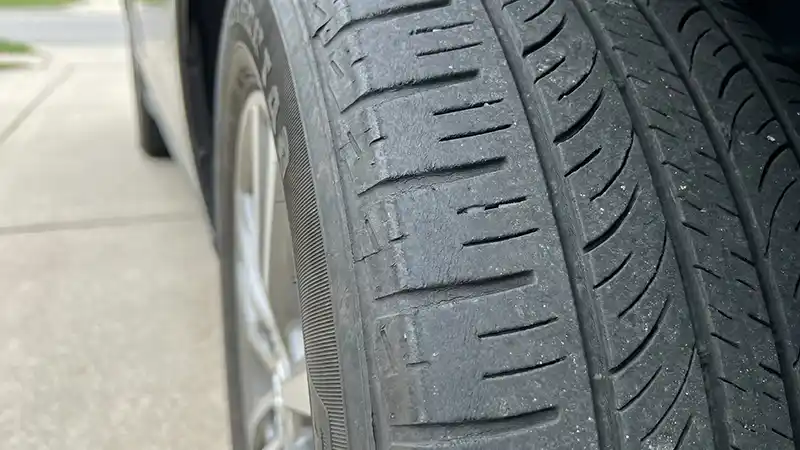
When the tire is new, these bars are barely noticeable. As the tread wears down, it becomes closer to the level of these bars. Once the tire’s tread is flush with the wear bars, it means the tread depth has reached the 2/32 of an inch minimum. At this point, the tire is considered worn out and must be replaced immediately for safety.
Why Tire Age Matters: Finding and Reading the DOT Code
Tread depth isn’t the only factor; a tire’s age is just as important. The rubber compounds in a tire degrade over time due to exposure to oxygen, UV rays, and heat. This process, known as oxidation, happens whether the tire is being used, sitting in a garage, or even stored as a spare. Old rubber becomes brittle, less flexible, and more prone to sudden failure.
To find your tire’s age, you need to locate the DOT code on the sidewall. This is a series of letters and numbers that begins with “DOT”. The last four digits are the most important—they represent the week and year the tire was manufactured.
- For example, a code ending in “3521” means the tire was made in the 35th week of 2021.
Most vehicle and tire manufacturers recommend replacing tires every 6 to 10 years, regardless of how much tread is left. If your tires are approaching this age range, have them professionally inspected annually, and plan for their replacement even if they look fine.
A Visual Inspection Checklist for Tire Damage
Performing a regular visual inspection of your tires can help you spot trouble before it leads to a dangerous situation. Walk around your vehicle and check each tire for the following issues:
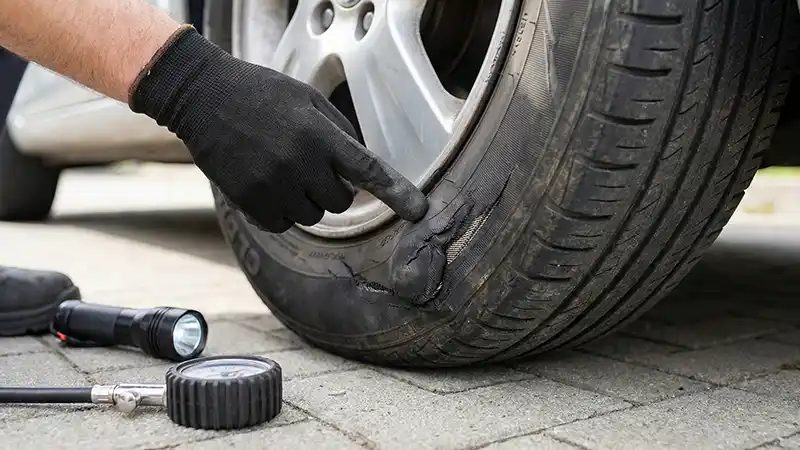
- Bulges and Blisters: A bulge or blister on the sidewall indicates that the internal structure of the tire has been compromised, often from hitting a pothole or curb. This is a serious condition that can lead to a sudden blowout and requires immediate tire replacement.
- Cracks and Cuts: Look for fine cracks (crazing or weather checking) on the sidewalls and in the tread grooves. This is a sign of dry rot caused by age and environmental exposure. Deeper cuts or gouges can also weaken the tire’s structure.
- Punctures: Check for nails, screws, glass, or other objects embedded in the tread. While some punctures can be safely repaired by a professional, a puncture in the sidewall or shoulder area means the tire must be replaced.
- Uneven Wear: How your tire wears can tell you about other problems with your vehicle. Center wear suggests over-inflation, while wear on both edges points to under-inflation. Wear on just one edge often indicates an alignment problem. Scalloped or cupped patterns can mean suspension or tire balance issues.
Performance Clues: How Your Car Tells You It Needs New Tires
Sometimes, your car will give you direct feedback that your tires are past their prime. Pay attention to how your vehicle feels and sounds while you drive. These performance changes can be subtle at first but are important warnings.
Vibrations and Shaking
While vibrations can be caused by several issues, worn or damaged tires are a common culprit. If you feel a persistent vibration or shaking, especially at higher speeds, it could be due to an out-of-balance tire, uneven wear, or an internal belt separation. This compromises both comfort and safety and should be inspected right away.
Changes in Handling and Grip
Worn tires have significantly less grip. You might notice your car slipping more easily on wet roads, a condition known as hydroplaning. You may also feel a loss of traction when accelerating from a stop or a less responsive feel when cornering. Any noticeable decrease in your vehicle’s handling stability is a major red flag.
Increased Braking Distance
If you find that it’s taking longer to stop your vehicle, especially in wet conditions, your tires are likely the cause. Worn tread cannot effectively grip the pavement, leading to longer and less predictable braking distances. This is one of the most critical safety reasons to replace old tires promptly.
So, When Should I Replace My Tires?
Deciding when to replace your tires involves evaluating several factors together. There isn’t a single mileage number that applies to every driver, as wear depends heavily on the tire’s quality, your driving style, road conditions, and vehicle maintenance. The best approach is to use a combination of the key indicators.
You should replace your tires when they meet any of the following criteria:
- Tread Depth is at 2/32″: Use the penny test or a gauge. If the tread is worn to the legal limit, replacement is non-negotiable.
- The Tire is Too Old: If the DOT code shows the tire is over 6-10 years old, replace it even if the tread looks deep.
- Visible Damage is Present: Any bulges, significant cracks, or non-repairable punctures mean the tire is unsafe.
- Performance has Declined: If you notice persistent vibrations, poor grip, or longer stopping distances, it’s time for a new set.
Factors That Affect How Long Your Tires Last
To maximize the life of your new tires, it’s helpful to understand what causes them to wear out. Several factors play a significant role:
- Proper Inflation: Consistently maintaining the correct air pressure (found on the sticker inside your driver’s door jamb) is the single most important factor for tire longevity and safety.
- Tire Rotation and Balancing: Rotating your tires every 5,000 to 7,000 miles promotes even wear. Balancing ensures the weight is distributed evenly, preventing vibrations.
- Wheel Alignment: A proper alignment ensures your tires make contact with the road at the correct angle, preventing premature edge wear.
- Driving Habits: Aggressive driving with hard braking, rapid acceleration, and high-speed cornering wears tires out much faster than smooth, defensive driving.
- Road and Weather Conditions: Frequent driving on poorly maintained roads, gravel, or in areas with extreme temperatures can shorten a tire’s lifespan.
Frequently Asked Questions About Tire Replacement
How often should I replace my tires if I don’t drive much?
Even if you drive infrequently, you should replace your tires based on age. Most manufacturers recommend replacement every 6 to 10 years because the rubber compounds degrade over time from exposure to the elements, which can make them unsafe.
Is it okay to replace just one or two tires?
It is best to replace all four tires at once for consistent performance. If you must replace fewer, it’s recommended to replace them in pairs (both front or both rear) with matching tires. On all-wheel-drive vehicles, replacing all four is often required to avoid damaging the drivetrain.
What is the minimum legal tread depth for tires in the US?
The generally accepted minimum legal tread depth across most of the United States is 2/32 of an inch. However, a tire’s performance, especially in wet or snowy conditions, is significantly reduced well before it reaches this legal limit.
When should I replace my tires for optimal winter driving?
For safe winter driving, you need more tread depth to handle snow and slush. Experts recommend replacing tires when the tread depth reaches 4/32 of an inch or even 5/32 of an inch to ensure you have adequate grip and control in harsh conditions.
Do I need to replace tires if I see small cracks on the sidewall?
Yes, even small cracks, often called weather checking or dry rot, are a sign that the rubber is aging and becoming brittle. These cracks can compromise the tire’s structural integrity and may lead to a sudden failure, so they should be inspected by a professional and typically warrant replacement.
How can I tell if my tires are too old to be safe?
Check the DOT code on the tire’s sidewall. The last four digits indicate the week and year of manufacture (e.g., 2520 means the 25th week of 2020). If your tires are more than six years old, it’s wise to have them inspected annually and plan to replace them soon, regardless of tread depth.
Conclusion
Knowing when to replace your tires is a fundamental part of responsible car ownership. By regularly checking your tread depth, monitoring the tire’s age, performing visual inspections for damage, and paying attention to your vehicle’s performance, you can ensure you replace them at the right time. This proactive approach is essential for maintaining control, efficiency, and, most importantly, your safety on the road. If you find any issues or are unsure about your tires’ condition, always consult a trusted mechanic or tire professional for an expert evaluation. {“@context”:”https://schema.org”,”@type”:”Article”,”headline”:”When Should I Replace My Tires? 7 Key Signs to Check”,”mainEntityOfPage”:”https://autofixnotes.com/?p=1106″,”datePublished”:”2025-12-12T13:08:33+00:00″,”dateModified”:”2025-12-12T13:08:33+00:00″}