
When you see the oil pressure light come on in your car’s dashboard, it can be worrying. Many drivers ignore it, hoping it will turn off by itself. But this small warning can mean big trouble for your engine if you do not act quickly. Knowing what the oil pressure light means, why it comes on, and what to do next can help you avoid expensive repairs and keep your car running safely.
Most modern vehicles use dashboard lights to warn about possible problems. The oil pressure light is especially important because your engine cannot work without proper lubrication. If you understand the signs, causes, and solutions for this warning, you can make better decisions and keep your vehicle healthy for years.
What Is The Oil Pressure Light?
The oil pressure light is a dashboard warning symbol that looks like an oil can or a dripping oil lamp. Some cars show the word “OIL” instead. This light is connected to the engine’s oil pressure sensor. When oil pressure drops below a safe level, the sensor sends a signal, and the warning light turns on.
The oil pressure light is not just a reminder to check your oil level. It warns you that the oil is not moving through your engine as it should. Without enough oil pressure, engine parts rub together, create heat, and can get damaged very quickly.
Why Is Oil Pressure Important?
Your engine has many moving parts. Motor oil helps by reducing friction, carrying away heat, and cleaning inside surfaces. For this to work, oil must travel under pressure through small channels to reach every part of the engine.
If the oil pressure is too low:
- Moving parts can grind together and wear out.
- The engine can overheat.
- Serious damage, like a seized engine, can happen in minutes.
Sometimes, the oil pressure light can mean a minor problem, but often, it is a sign of something urgent.
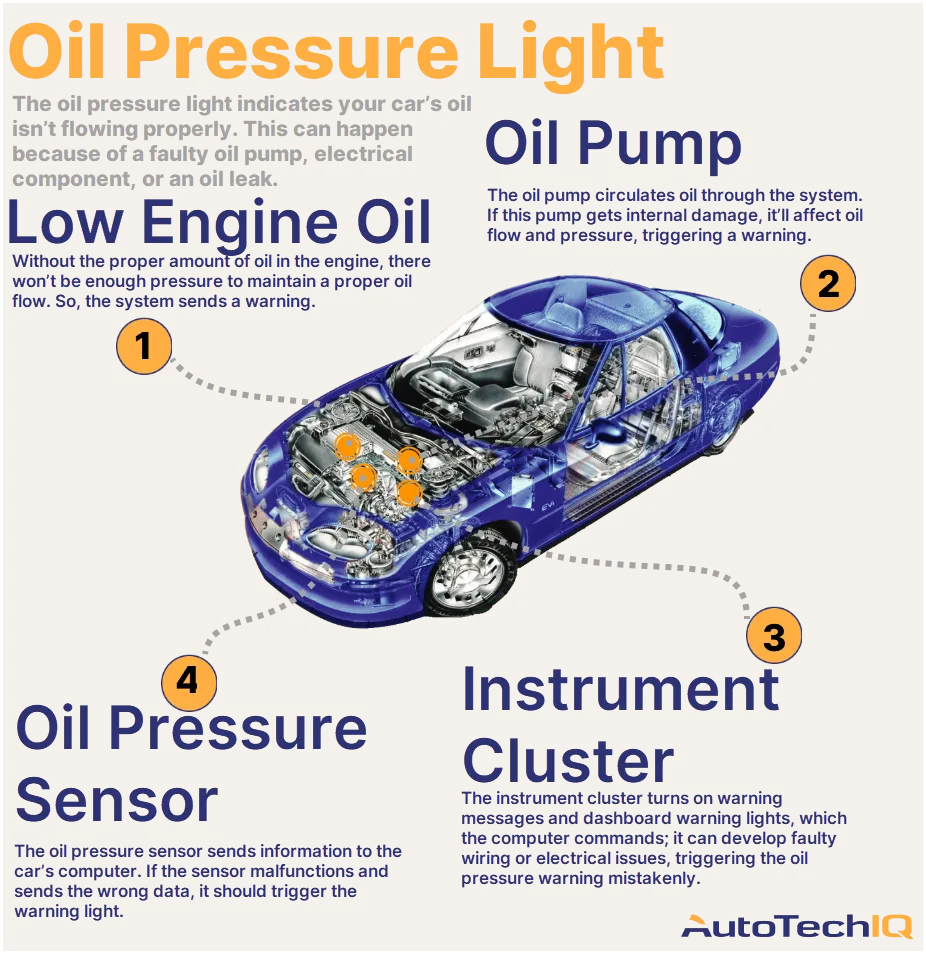
Credit: www.autotechiq.com
Common Reasons The Oil Pressure Light Turns On
Understanding why the oil pressure light appears will help you respond correctly. Here are some of the main causes:
1. Low Oil Level
If your engine does not have enough oil, there is not enough pressure. This can happen if you have not checked or changed your oil recently, or if your car burns or leaks oil.
2. Worn Oil Pump
The oil pump pushes oil through the engine. If it becomes weak or fails, pressure drops, and the light comes on.
3. Clogged Oil Filter
The oil filter removes dirt and debris. Over time, it can get blocked, restricting oil flow and lowering pressure.
4. Old Or Thin Oil
Oil breaks down with age and high heat. If you use the wrong oil or go too long between changes, oil can lose thickness (viscosity) and fail to maintain pressure.
5. Oil Leaks
Leaks from gaskets, seals, or the oil pan can reduce oil levels and pressure.
6. Faulty Oil Pressure Sensor
Sometimes, the sensor or wiring is bad. In this case, the light can turn on even if the oil pressure is fine.
7. Engine Wear
Engines with high mileage can have worn bearings and seals. These gaps allow oil to escape, reducing pressure.
8. Blocked Oil Passages
Sludge or debris inside the engine can block passages and prevent oil from reaching all areas.
What To Do When The Oil Pressure Light Comes On
Acting quickly can save your engine. Here’s what you should do:
1. Pull Over Safely
As soon as you see the oil pressure light, find a safe place to stop. Do not keep driving if the light stays on.
2. Turn Off The Engine
Shut off the engine to prevent damage. Running the engine with low oil pressure for even a few minutes can cause serious harm.
3. Check The Oil Level
After waiting a few minutes for the engine to cool, open the hood and pull out the dipstick. Wipe it, insert it again, then check the level. If oil is low, add the correct type if you have some.
4. Look For Leaks
Check under the car and around the engine for signs of oil leaking.
5. Restart And Observe
If you add oil and the light goes off, drive to a mechanic soon. If the light stays on, or you hear strange noises, do not drive—call for a tow.
6. Consult A Mechanic
Even if the light turns off, have your car checked. Sometimes the problem is deeper and needs expert attention.
What Happens If You Ignore The Oil Pressure Light?
Many people make the mistake of ignoring the oil pressure warning. Here’s what can happen:
- Engine overheating: Without oil, friction rises, and the engine gets too hot.
- Bearing damage: Bearings help moving parts glide smoothly. Low oil pressure means they can wear out fast.
- Engine seizure: If parts weld together due to heat and lack of oil, the engine can lock up completely. This often requires a new engine.
- Expensive repairs: Fixing damage from low oil pressure can cost thousands of dollars, much more than simple oil maintenance.
Oil Pressure Light Vs. Other Oil Warnings
It’s easy to confuse the oil pressure light with other oil-related alerts. Here’s a comparison to help you understand the difference:
| Warning Light | What It Means | Immediate Action Needed? |
|---|---|---|
| Oil Pressure Light | Oil is not circulating properly; pressure is too low | Yes, stop engine immediately |
| Oil Change Reminder | It’s time for routine oil change | No, but change oil soon |
| Check Engine Light | General engine issue; could include oil-related problems | Depends on severity |
Knowing which light is on helps you respond correctly.
How Mechanics Diagnose Oil Pressure Problems
A professional mechanic uses several methods to find out why the oil pressure light is on:
- Manual oil pressure test: They connect a gauge to the engine to measure actual pressure.
- Visual inspection: They check for leaks, worn parts, and oil condition.
- Sensor check: They test the oil pressure sensor and wiring for faults.
- Scan tool: For newer cars, they read trouble codes from the car’s computer.
Here’s how a mechanic’s approach compares to a driver’s:
| Step | Driver | Mechanic |
|---|---|---|
| Check oil level | Yes | Yes |
| Inspect for leaks | Basic | Detailed |
| Test oil pressure | No | Yes, with gauge |
| Check sensor | No | Yes |
| Read computer codes | No | Yes |
How To Prevent Oil Pressure Problems
You can avoid most oil pressure light issues by following a few simple steps:
- Change oil regularly: Follow your car’s maintenance schedule for oil and filter changes.
- Use the right oil: Always use the type and grade recommended in your owner’s manual.
- Check oil level often: Check the dipstick every few weeks and before long trips.
- Watch for leaks: Look for oil spots where you park and check under the hood for wet areas.
- Don’t ignore warning lights: If any warning appears, investigate it right away.
Non-obvious Insights Most Drivers Miss
Many people think the oil pressure light only means “add oil. ” But sometimes, the problem is not about the amount of oil. For example, using the wrong oil (too thin or thick) can cause low pressure even if the oil level is fine.
Also, cold weather can temporarily affect oil pressure, especially if the oil is old or not made for your climate.
Another detail: after an oil change, if the light comes on, it could mean the oil filter is not installed correctly, or the wrong filter was used. Always check your oil light after maintenance.
What If The Oil Pressure Light Flickers?
A flickering oil pressure light usually means the pressure is borderline—sometimes enough, sometimes not. This can happen at low engine speeds, like idling at a stoplight. It often points to a worn oil pump, thin oil, or low oil level.
Do not ignore a flickering light; it is a sign you should check your oil and see a mechanic soon.

Credit: www.machinerylubrication.com
Oil Pressure Light In New Vs. Old Cars
Older cars may develop oil leaks or worn parts that trigger the oil pressure light. Newer cars have more sensitive sensors and may alert you earlier. In both cases, the risk of ignoring the light is the same—serious engine damage.
Here’s a quick comparison:
| Car Age | Common Cause of Light | How to Respond |
|---|---|---|
| Older Car | Oil leaks, worn engine parts | Check for leaks, regular maintenance |
| Newer Car | Sensor or filter issues | Check sensor, confirm with mechanic |
The True Cost Of Ignoring The Oil Pressure Light
According to industry data, replacing an engine due to oil starvation can cost $4,000 to $7,000 or more, depending on the car. By comparison, an oil change costs $30 to $70. That is why acting quickly when you see the oil pressure warning light is so important.
Trustworthy Sources For More Information
For more in-depth technical details about oil pressure systems, visit the Wikipedia page on oil pumps.
Frequently Asked Questions
What Should I Do First If My Oil Pressure Light Comes On?
Stop driving as soon as it is safe. Turn off the engine, check the oil level, and add oil if needed. If the light stays on, call for a tow—do not drive.
Can I Drive With The Oil Pressure Light On For A Short Distance?
It is never safe to drive with the oil pressure light on. Even a short distance can cause engine damage. Always stop and check before continuing.
Does The Oil Pressure Light Always Mean Low Oil?
No. It can also mean a bad oil pump, clogged filter, worn engine parts, or a faulty sensor. Checking the oil level is only the first step.
How Often Should I Check My Oil Level?
Check at least once a month, and always before long trips. Older cars may need more frequent checks due to possible leaks or burning oil.
What Does It Mean If The Oil Pressure Light Comes On After An Oil Change?
It may mean the filter was not installed correctly, the wrong oil was used, or the system needs time to build pressure. If the light does not go off in a few seconds, turn off the engine and ask the mechanic to double-check their work.
Caring for your car’s oil system is one of the best ways to avoid costly repairs and keep your vehicle reliable. When the oil pressure light comes on, do not ignore it—quick action can save your engine and your wallet.
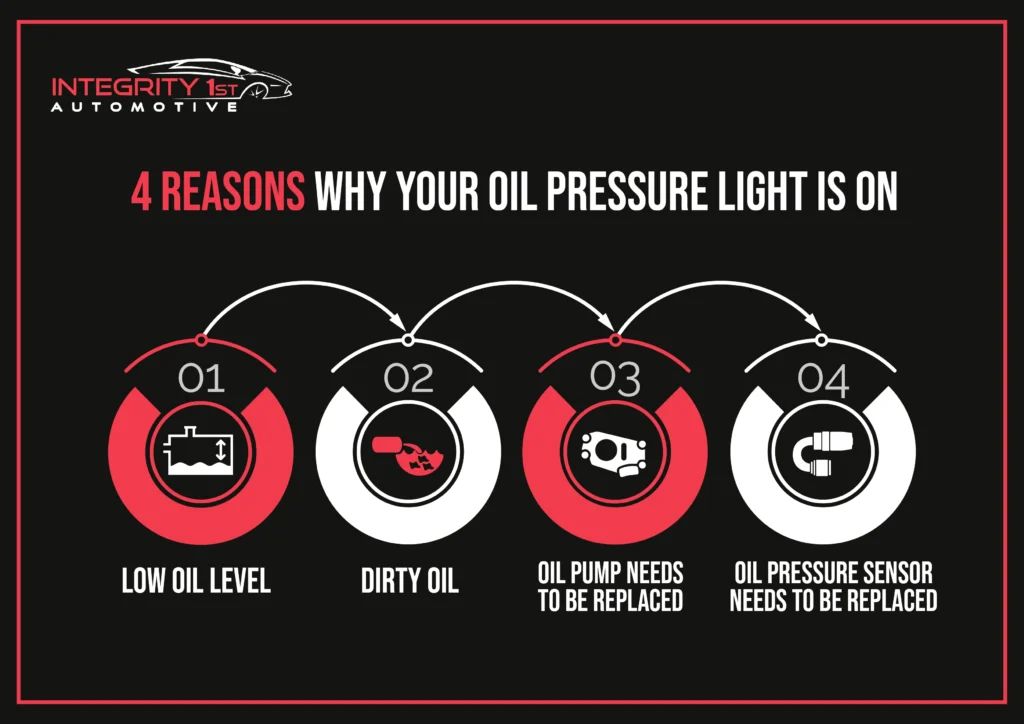
Credit: www.integrity1auto.com